Introduction
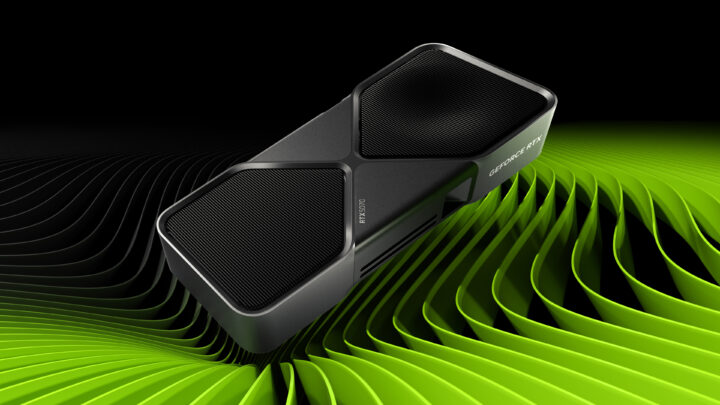
The NVIDIA GeForce RTX 5070 Ti occupies one of the most important positions in the Blackwell range. It is not the flagship showcase represented by the RTX 5090, and it does not carry the same premium as the RTX 5080. Instead, it is aimed at enthusiasts who want very strong 1440p performance, enough capability for 4K gaming and the complete DLSS 4 feature set without moving into four-figure launch pricing.
On paper, the formula looks attractive. The card combines 8,960 CUDA cores with 16 GB of GDDR7 memory, a 256-bit memory interface and 300 W total graphics power. It supports DisplayPort 2.1b, AV1 encoding, fourth-generation ray-tracing cores and fifth-generation Tensor cores. NVIDIA launched it on 20 February 2025 at $749 in the United States and £729 in the United Kingdom.
The complication is that NVIDIA did not produce a Founders Edition. Every RTX 5070 Ti is a partner model, which means cooler quality, physical size, noise, factory clocks and real selling prices differ. A favourable verdict at the official launch price does not automatically apply to a heavily marked-up card. This evidence-based RTX 5070 Ti review therefore separates the GPU’s underlying performance from the value of any particular retail model.
How this review was produced
5000 Series has not tested the RTX 5070 Ti directly. This is an original editorial assessment based on NVIDIA’s official specifications and independently published benchmark, ray-tracing, power and efficiency testing from established hardware reviewers. We preserve the conditions attached to each result instead of combining unlike tests into a synthetic average of our own.
Results from TechSpot, GamersNexus and Tom’s Hardware use different games, processors, settings and test procedures. They should be read as complementary evidence, not as interchangeable measurements. Manufacturer feature claims are identified as such, while performance conclusions are based on independently measured data. Prices quoted in this review are launch reference prices unless explicitly described otherwise; retailer prices and availability can change.
The short version
The RTX 5070 Ti is an excellent high-refresh 1440p graphics card and a credible 4K option. Its 16 GB memory capacity is appropriate for this tier, its ray-tracing performance is strong, and DLSS 4 gives supported games useful flexibility. Independent suites generally place it around 7–11% ahead of the RTX 4070 Ti Super and about 12–13% behind the RTX 5080, with larger or smaller gaps in individual titles.
Those are worthwhile results, but they are not a transformative generational leap. The product makes the most sense at or close to the $749 US or £729 UK launch reference. A large board-partner premium erodes its advantage quickly because the buyer approaches RTX 5080 territory without receiving RTX 5080 performance. Existing RTX 4070 Ti Super owners have little reason to upgrade; owners of older RTX 30 Series or slower cards have a much stronger case.
Blackwell specifications and positioning
The RTX 5070 Ti uses NVIDIA’s Blackwell architecture with 8,960 CUDA cores, 70 fourth-generation RT cores and 280 fifth-generation Tensor cores. The reference base and boost clocks are 2.30 GHz and 2.45 GHz. Partner manufacturers can advertise higher boost figures, but the actual clock reached in a game depends on temperature, power and the card’s firmware.
Its 16 GB of GDDR7 runs at 28 Gbps across a 256-bit bus, producing 896 GB/s of memory bandwidth. That bandwidth is a substantial platform strength. The capacity is also reassuring for a GPU intended for high-resolution gaming: it avoids the immediate compromises associated with smaller frame buffers and gives creators more useful working space. It is not unlimited, however. Large professional scenes and local AI models can still exceed 16 GB, so users buying primarily for memory-intensive work should calculate their needs rather than assume a gaming label guarantees sufficient capacity.
The canonical RTX 5070 Ti Product page records the complete reference specification. In market position, this card sits above the RTX 5070 and below the RTX 5080. That sounds obvious, but the price gap matters more than the name. Because retail versions differ, a discounted RTX 5080 can sometimes challenge an expensive 5070 Ti, while a sensibly priced 5070 Ti can be the more balanced purchase.
No Founders Edition: why the exact model matters
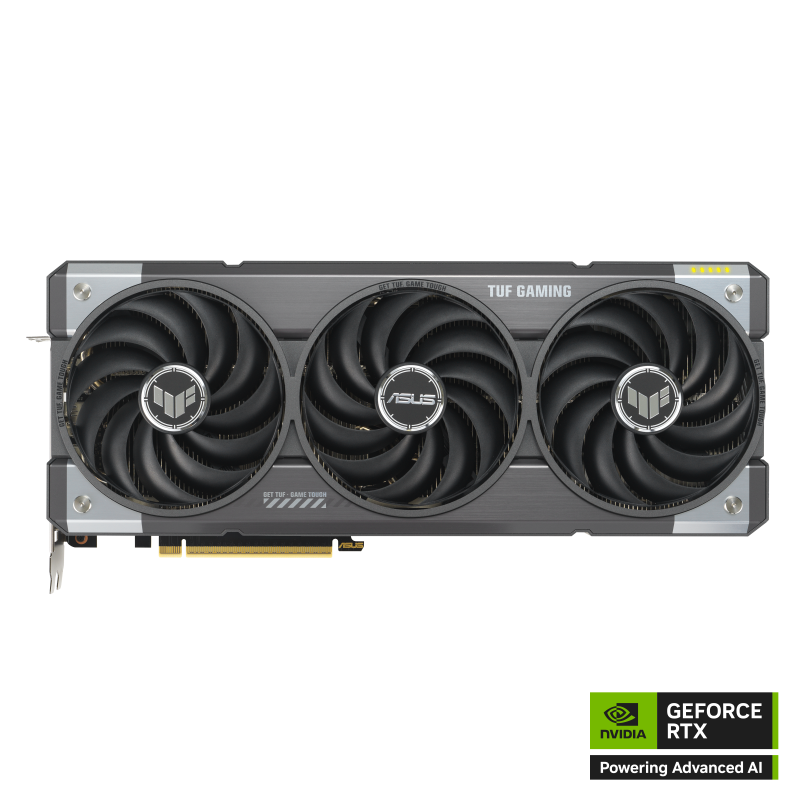
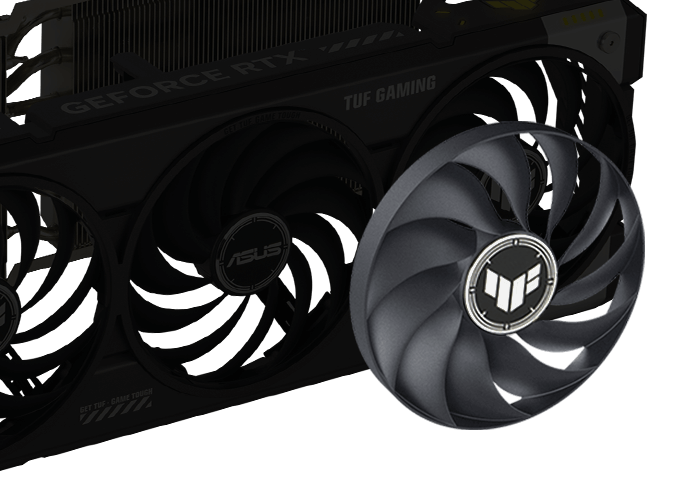
NVIDIA’s decision not to offer a Founders Edition changes how the RTX 5070 Ti should be reviewed and purchased. There is no single reference cooler, length, slot width or acoustic profile that represents every card. A compact partner model and a large triple-fan factory-overclocked model share the same GPU but can behave differently in temperature, noise and case compatibility.
GamersNexus tested an MSI model and reported that the sample operated below NVIDIA’s reference clock target in some conditions. That observation should not be generalised to every 5070 Ti, but it illustrates why the board-partner implementation matters. Review data for one cooler should not be presented as a universal thermal or acoustic result for the entire product family.
Before buying, check the precise model number, dimensions, power connector location, support-bracket requirements and warranty. A more expensive cooler can be worthwhile when it is meaningfully quieter or fits a particular build, but a decorative premium does not improve the underlying GPU by a whole performance tier. For a product with no official Founders Edition baseline, careful model-level comparison is essential.
1440p gaming performance
High-refresh 1440p is the RTX 5070 Ti’s natural environment. At this resolution, it has enough native performance to run demanding games at high or ultra settings while leaving space for ray tracing or a high-refresh monitor. Less demanding competitive games can reach far higher frame rates, although the processor increasingly becomes the limiting factor when the GPU is producing frames very quickly.
TechSpot’s launch suite placed the RTX 5070 Ti 7% ahead of the RTX 4070 Ti Super at 1440p on average and 8% ahead of the Radeon RX 7900 XT. It remained 12% behind the RTX 5080. GamersNexus measured 187 frames per second in Final Fantasy XIV at 1440p, approximately 9% ahead of the RTX 4070 Ti Super in that specific test. The agreement between these separate examples supports the view that this is a modest but repeatable step over the previous 4070 Ti-class card rather than a dramatic jump.
An average hides substantial game-to-game variation. Engine behaviour, driver support, CPU limits and memory demands can widen or narrow the gap. Buyers should give more weight to results from the games they actually play than to a single aggregate number. A simulation or strategy title limited by one CPU thread may show little benefit from the faster GPU, while a graphically demanding action game can expose more of the difference.
The 16 GB frame buffer also suits this resolution well. Current games can allocate significant memory when high-resolution texture packs and ray tracing are enabled, but the RTX 5070 Ti is not forced into the same risk profile as an 8 GB card. Memory capacity does not make every stutter disappear—asset streaming, shader compilation and CPU performance still matter—but it removes one obvious constraint from an otherwise premium 1440p configuration.
4K gaming performance
At 4K, the RTX 5070 Ti remains capable but requires more judgement. Tom’s Hardware recorded an average just above 60 frames per second across its rasterisation suite at 4K Ultra. TechSpot found an 11% average advantage over the RTX 4070 Ti Super and a 14% lead over the Radeon RX 7900 XT at 4K, while the RTX 5080 was 13% faster. These figures place the card on the useful side of 4K gaming, but not in the no-compromise category.
GamersNexus measured 68 frames per second in Starfield at 4K and 73.6 frames per second in Dragon’s Dogma 2. In Resident Evil 4 at 4K, the RTX 5070 Ti produced 107 frames per second compared with 122 for the RTX 5080 in the same published test. These examples show both sides of the product: it can deliver genuinely strong 4K results, while the faster model retains a visible advantage.
A 4K buyer should expect to adjust settings in the heaviest titles. Reducing one or two expensive options from ultra to high often improves performance with little visible loss. DLSS Super Resolution can also provide a substantial uplift in compatible games. This is not a weakness unique to the 5070 Ti; even faster GPUs face demanding path-traced modes. The distinction is that an RTX 5080 or 5090 offers more native headroom before those compromises become necessary.
The card is therefore a good match for a 4K 60–120 Hz display when the owner is willing to use sensible settings and upscaling. Buyers seeking maximum native settings at very high refresh rates should look higher in the range. Conversely, someone using a 60 Hz screen may find the 5070 Ti sufficiently fast without paying for unused flagship performance.
Ray tracing and path tracing
NVIDIA’s ray-tracing ecosystem remains a major reason to consider the RTX 5070 Ti. The fourth-generation RT cores are supported by DLSS Super Resolution and Ray Reconstruction, allowing compatible games to recover performance and improve the stability of ray-traced effects. This matters most in titles where advanced lighting is central to the visual design rather than an optional reflection setting.
TechSpot’s ray-tracing aggregate with quality upscaling placed the 5070 Ti 6% ahead of the RTX 4070 Ti Super at 1440p. At 4K it was 13% ahead of the older card, but still 9% behind the RTX 4080 Super and averaged 51 frames per second. GamersNexus measured 52 frames per second in Black Myth: Wukong at 4K with ray tracing and upscaling under its stated conditions, compared with 59 for the RTX 5080.
Those results show that 4K ray tracing is possible, but the most demanding modes benefit from upscaling and sometimes frame generation. Full path tracing remains severe enough that image reconstruction is part of the intended experience. Users who reject all upscaling should set more conservative expectations, especially at 4K.
Image quality varies by game and implementation. DLSS can produce excellent results, but fine detail, particles, transparent effects and motion can still reveal artefacts. It is best evaluated in motion on the intended display rather than by treating a feature label as a universal guarantee. The RTX 5070 Ti provides the hardware and software tools; developers determine how well they are integrated.
DLSS 4 and Multi Frame Generation
DLSS 4 is the headline Blackwell feature. Its transformer-based models are used for Super Resolution and Ray Reconstruction, while Multi Frame Generation can insert up to three generated frames between traditionally rendered frames in supported games. On a high-refresh display, the increase in displayed smoothness can be striking.
Generated frames need careful interpretation. They do not update game logic or player input in the same way as a natively rendered frame. A low underlying frame rate can still feel sluggish even when the displayed counter is much higher. NVIDIA Reflex reduces parts of the latency chain, but Multi Frame Generation works best when the game already has a healthy base frame rate—roughly 60 frames per second or more is a much stronger starting point than 30.
The RTX 5070 Ti is well placed for this approach because its native 1440p performance is already high and its 4K performance is often within reach of a good baseline after quality upscaling. Multi Frame Generation can then make better use of a 120 Hz, 144 Hz or faster display. It is less persuasive when used to conceal settings that are too demanding for responsive play before generated frames are enabled.
Benchmark charts should never mix native and Multi Frame Generation results without prominent labels. Our structured results keep upscaling and frame-generation conditions explicit. For buying decisions, native performance remains the foundation; DLSS 4 is a valuable enhancement whose benefit depends on support, implementation and the user’s tolerance for reconstruction artefacts.
Power, thermals and efficiency
NVIDIA rates the RTX 5070 Ti at 300 W total graphics power and recommends a 750 W system power supply for its reference configuration. That is materially easier to accommodate than the 360 W RTX 5080 or 575 W RTX 5090, but it is still a high-performance component. The complete system, processor choice, overclocking and transient behaviour should inform the PSU decision.
GamersNexus recorded approximately 264 W in its Final Fantasy XIV efficiency test and calculated 0.37 frames per watt for the tested sample at 4K. A single game cannot define universal efficiency, yet the result supports the broader conclusion that the 5070 Ti can deliver high-end performance without the flagship’s extreme consumption.
Thermal and noise conclusions must remain model-specific because there is no Founders Edition. A large cooler may keep the GPU quiet at the cost of occupying more slots; a compact model may fit more cases while requiring a more aggressive fan curve. Case airflow, ambient temperature and fan configuration also affect results. Do not assume the temperature quoted for one partner card predicts another.
Frame-rate caps can reduce unnecessary power use when performance exceeds the display’s refresh rate. Undervolting or power-limit adjustments may also improve efficiency, but results vary and every manual change should be stability-tested. Most buyers should begin with the card’s validated defaults and optimise only when they understand the trade-offs.
Creator, streaming and AI workloads
The RTX 5070 Ti is more than a gaming card. CUDA acceleration, Studio drivers and 16 GB of VRAM make it suitable for video editing, 3D rendering, image generation and other supported workloads. It includes two ninth-generation NVENC encoders and one sixth-generation NVDEC decoder, with AV1 encode and decode support. Streamers and video creators can benefit when their chosen software exposes that hardware.
Sixteen gigabytes is useful but defines the boundary of the card’s professional appeal. Many editing and rendering projects fit comfortably, while large scenes, high-resolution compositing or local AI models can exceed it. When a workload’s working set spills beyond VRAM, the performance penalty can outweigh a modest difference in raw compute. Professional buyers should test or research their exact application and project size.
Blackwell’s fifth-generation Tensor cores support newer low-precision formats, including FP4 in compatible software. That can increase throughput and reduce memory requirements for suitable AI models, but application support and model quality determine the real benefit. Manufacturer AI TOPS figures are not interchangeable with time-to-completion measurements from a specific tool.
For a creator who also games, the 5070 Ti is a versatile platform. For a user whose income depends on rendering speed or who repeatedly exceeds 16 GB, the RTX 5080’s higher compute performance may help but does not add memory capacity, while the 32 GB RTX 5090 is a much larger financial and power commitment. The correct choice depends more on workload fit than product hierarchy.
RTX 5070 Ti versus RTX 4070 Ti Super
The RTX 4070 Ti Super is the most direct generational comparison because it also has 16 GB of memory and targets the same enthusiast class. The 5070 Ti is consistently faster in the cited aggregate testing, adds Blackwell’s Multi Frame Generation and uses GDDR7 for far greater memory bandwidth. It also brings DisplayPort 2.1b for newer high-bandwidth monitors.
The problem for existing owners is scale. A 7% average advantage at 1440p and 11% at 4K does not transform the experience. Some games improve more, but replacing a working 4070 Ti Super for that native uplift is difficult to justify. The upgrade case rests on a specific Blackwell feature or an unusually favourable resale and purchase price, not on routine generational replacement.
RTX 5070 Ti versus RTX 5080
The RTX 5080 is approximately 12–13% faster in TechSpot’s 1440p and 4K aggregates, with individual GamersNexus results showing gaps in roughly the same region. Both cards have 16 GB of GDDR7 and the same broad Blackwell feature set. The 5080 therefore buys more performance rather than more memory capacity.
At their launch reference prices, the 5070 Ti has the stronger value position. That changes when a premium partner 5070 Ti approaches a competitively priced 5080. Compare actual checkout prices, not model names or percentage discounts. If the price difference is small enough, the 5080’s extra headroom is worthwhile; if the 5070 Ti remains close to its intended price, it is the more proportionate choice for most 1440p systems.
UK and US pricing
NVIDIA announced a $749 US launch price and a £729 UK launch price for the RTX 5070 Ti. These are the correct reference points for this review, but they do not describe every card. With no Founders Edition, retail pricing begins and ends with partner inventory. Larger coolers, factory overclocks, limited availability and retailer margin can all increase the total.
Judge value using the final price for the exact model. In the UK, compare pounds with pounds and include delivery. In the US, remember that advertised prices commonly exclude state sales tax. A converted currency figure is not a fair substitute because regional taxation, distribution and warranty arrangements differ.
Our retailer area is designed to show separately labelled UK/GBP and US/USD offers, the exact card variant and the date a price was last checked. It remains empty until retailer relationships and links are verified. We will not disguise an ordinary product page or an unverified historical price as a live affiliate offer. When affiliate links are introduced, they will be clearly disclosed and will not determine the editorial score.
Who should buy the RTX 5070 Ti?
The strongest buyer is upgrading from an RTX 30 Series card or an older mid-range GPU and owns a high-refresh 1440p display. That user receives a large real-world improvement, 16 GB of memory, strong ray tracing, AV1 support and the complete DLSS 4 toolset. It is also a sensible 4K card for someone comfortable using optimised settings and quality upscaling.
It is less appropriate for 1080p gaming, where a cheaper card usually produces a more balanced system. An RTX 4070 Ti Super owner should normally keep the existing card. Buyers focused on maximum native 4K performance should consider the RTX 5080, while professionals who need more than 16 GB should prioritise memory capacity before gaming benchmarks.
Case and model selection are unusually important. Confirm physical dimensions and power requirements before purchase, then look for independent testing of the precise partner card when noise and cooling matter. The GPU name tells you expected performance; it does not tell you whether a specific cooler will fit or remain quiet.
Retailer offers
Where to buy
Prices and availability are checked manually and may change. Confirm the final price with the retailer before buying.
Affiliate disclosure: We may earn a commission from qualifying purchases made through marked links, at no extra cost to you.
United Kingdom
-
Scan UK Availability not confirmedCheck retailer for current price Last checkedCheck UK price (non-affiliate) (opens in a new tab)
-
Overclockers UK Availability not confirmedCheck retailer for current price Last checkedCheck UK price (non-affiliate) (opens in a new tab)
-
Amazon UK — ASUS TUF RTX 5070 Ti OC Affiliate link Availability not confirmedCheck retailer for current price Last checkedCheck current price at Amazon UK (opens in a new tab)
United States
-
Newegg US Affiliate link Availability not confirmedCheck retailer for current price Last checkedCheck current price at Newegg (opens in a new tab)
-
B&H Photo Video Availability not confirmedCheck retailer for current price Last checkedCheck US price (non-affiliate) (opens in a new tab)
-
Amazon US — ASUS TUF RTX 5070 Ti OC Affiliate link Availability not confirmedCheck retailer for current price Last checkedCheck current price at Amazon US (opens in a new tab)
Verdict
The NVIDIA GeForce RTX 5070 Ti is a strong, well-balanced high-end graphics card. It delivers excellent 1440p performance, credible 4K results, capable ray tracing and a modern feature platform. Its 16 GB of GDDR7 is appropriate for premium gaming, while dual NVENC encoders, AV1 and CUDA support expand its usefulness for creators.
It is not an essential upgrade from the RTX 4070 Ti Super. The independently measured native gains are too modest for that, and Multi Frame Generation should not be mistaken for equivalent native responsiveness. The absence of a Founders Edition also makes value and physical design dependent on the partner card selected.
At or near the $749 US or £729 UK launch reference, the RTX 5070 Ti earns a recommendation for high-refresh 1440p and carefully configured 4K systems. At a large premium, compare it directly with the RTX 5080 before buying. Our overall score of 81/100 and Recommended at MSRP award reflect a capable GPU whose appeal depends on disciplined pricing.
Sources and evidence
Official specifications and launch information: NVIDIA GeForce RTX 5070 family and NVIDIA RTX 50 Series launch announcement.
Independent performance evidence: TechSpot RTX 5070 Ti review, GamersNexus RTX 5070 Ti review and Tom’s Hardware RTX 5070 Ti performance testing. All sources were checked on 3 September 2026. External links are provided for transparency and attribution; 5000 Series has not reproduced the source articles.