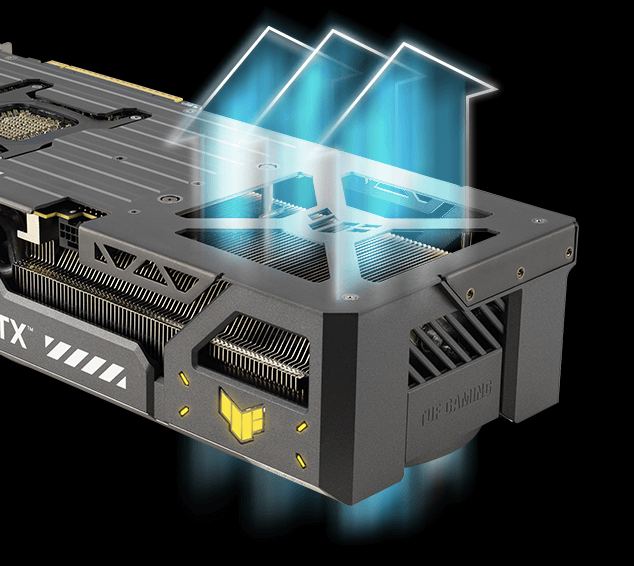
Review methodology: 5000 Series has not tested this graphics card directly. This is an original evidence-based assessment built from NVIDIA’s reference specifications and independently published benchmark, thermal and power measurements. Results from different reviewers are kept in their own test context and are not presented as if they came from one laboratory.
RTX 5080 review: the short version
The NVIDIA GeForce RTX 5080 is a very fast 4K graphics card, but it is a complicated generational upgrade. It combines 10,752 CUDA cores, 16 GB of GDDR7 memory, a 256-bit memory interface and a 360 W total graphics power rating with Blackwell’s new ray-tracing, AI and media capabilities. It also adds DisplayPort 2.1b and DLSS 4 Multi Frame Generation, two features that give it practical advantages over an RTX 4080-class card in the right system.
The problem is native performance. TechSpot’s 17-game launch suite placed the RTX 5080 only 4% ahead of the RTX 4080 Super at 1440p and 11% ahead at 4K. GamersNexus likewise found small uplifts in several conventional games, although individual ray-traced workloads and efficiency tests were more favourable. That is enough to make the RTX 5080 the stronger card when both products cost the same, but not enough to make an RTX 4080 or 4080 Super owner rush to upgrade.
At its $999 US and £979 UK launch prices, the RTX 5080 made sense as a replacement for the RTX 4080 Super rather than as a revolutionary new tier. Real value depends entirely on the price you can actually pay. Stock, partner-card premiums and later market changes can turn a defensible high-end purchase into a poor one very quickly. Our overall score is therefore based on the card’s capabilities at or near official pricing, not on inflated listings.
Key specifications
| Specification | RTX 5080 reference design |
|---|---|
| Architecture | NVIDIA Blackwell |
| CUDA cores | 10,752 |
| Base / boost clock | 2.30 / 2.62 GHz |
| Memory | 16 GB GDDR7 |
| Memory interface | 256-bit |
| Total graphics power | 360 W |
| Recommended system power | 850 W for NVIDIA’s reference configuration |
| Display outputs | 3× DisplayPort 2.1b, 1× HDMI 2.1b |
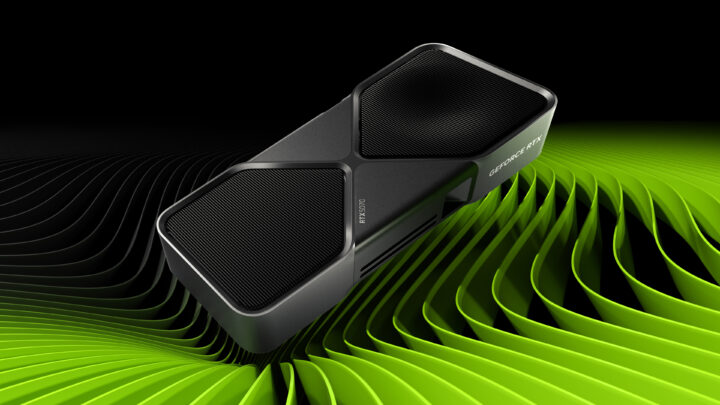
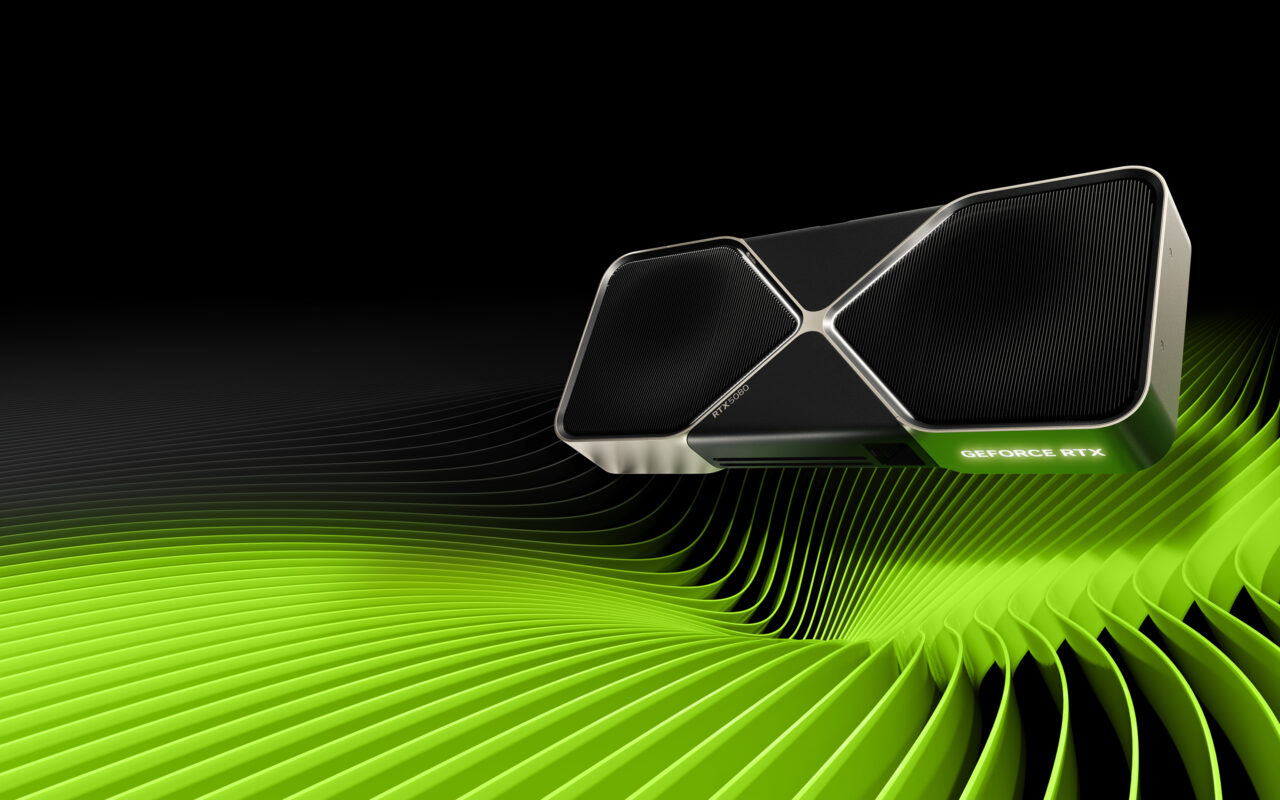
| Founders Edition dimensions | 304 × 137 mm, two-slot reference specification |
| Launch date | 30 January 2025 |
| Launch price | $999 US / £979 UK |
These figures describe NVIDIA’s Founders Edition or reference implementation. Add-in-board models can use different clocks, coolers, dimensions and power limits, so a buyer should confirm the exact product code rather than assuming every RTX 5080 is physically identical.
Blackwell architecture and 16 GB GDDR7
The RTX 5080 uses NVIDIA’s Blackwell architecture and brings fifth-generation Tensor cores plus fourth-generation ray-tracing cores to the 80-class position. NVIDIA lists 1,801 AI TOPS and 171 RT TFLOPS for the reference card, but those vendor metrics should not be interpreted as universal application performance. Software support, precision, workload and optimisation determine how much of the theoretical capability becomes useful.
The memory system is more immediately understandable. Sixteen gigabytes of GDDR7 is attached to a 256-bit bus. The faster memory provides considerably more bandwidth than the GDDR6X configuration used by the RTX 4080 Super, helping the RTX 5080 at 4K and in bandwidth-sensitive work. Sixteen gigabytes is still enough for the overwhelming majority of current games at sensible settings, and it is a workable capacity for video editing, 3D creation and local AI experiments.
It is not a luxurious amount for a card in this price class. Heavily modified games, very large rendering scenes and larger local AI models can exceed 16 GB. The 32 GB RTX 5090 provides much more professional headroom, while competing products may offer more capacity at lower prices. This does not make the RTX 5080 unsuitable for 4K gaming, but buyers expecting an expensive GPU to serve memory-intensive work for many years should understand the distinction between today’s gaming adequacy and workstation-like flexibility.
Blackwell also upgrades the media engine. NVIDIA specifies two ninth-generation NVENC encoders and two sixth-generation NVDEC decoders with AV1 encode and decode support. Creators can use those blocks for streaming, capture and supported export workflows without relying exclusively on general shader resources. Application support remains important, but NVIDIA’s broad CUDA and Studio ecosystem is a genuine strength for mixed gaming-and-creation systems.
Founders Edition design, ports and installation
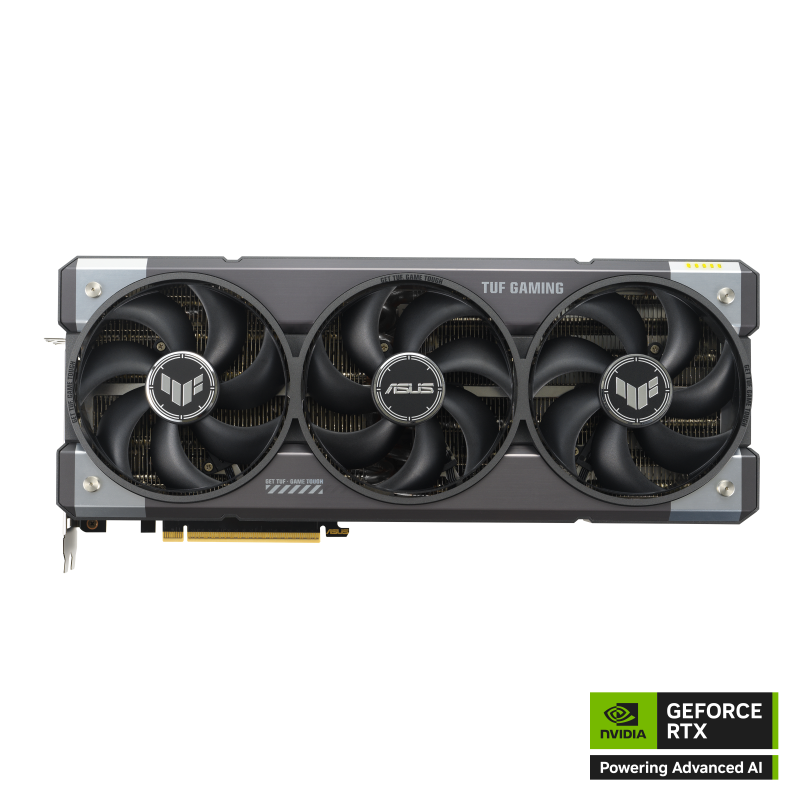
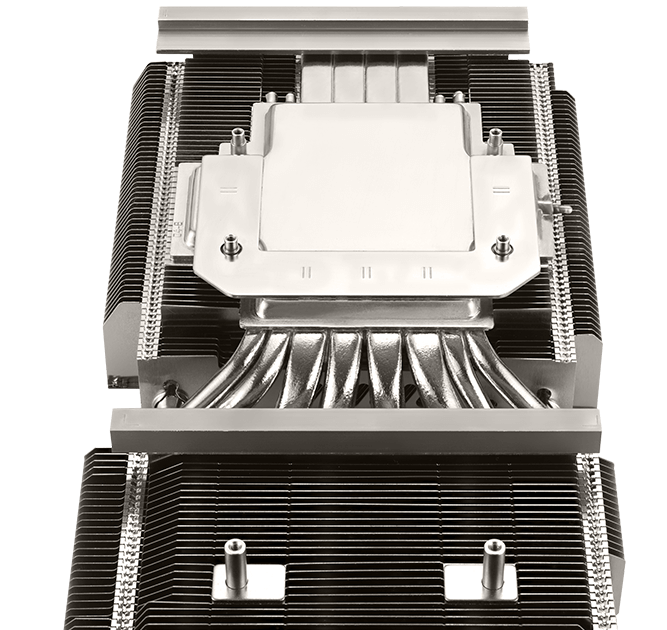
The RTX 5080 Founders Edition uses NVIDIA’s compact double flow-through design. The reference specification lists a 304 mm length, 137 mm width and two-slot card, although NVIDIA’s installation guidance recommends allowing the equivalent of a third slot for airflow plus extra room for the power cable. That distinction matters. A card may occupy two formal expansion slots and still need more practical breathing space.
Partner cards are frequently larger. Triple-fan coolers, factory overclocks and higher power targets can push a model beyond the Founders Edition dimensions. Before buying, measure from the rear expansion slots to the front fans or radiator, check card height against the side panel and allow the power lead to curve naturally. A sharply bent 16-pin cable or a connector that is not fully inserted creates an avoidable risk.
NVIDIA rates the card at 360 W and recommends an 850 W system power supply for its Ryzen 9 9950X reference configuration. It supports either three separate PCIe eight-pin cables through the supplied adapter or one suitable 450 W-or-greater PCIe Gen 5 cable. The whole PC determines the right PSU capacity: a power-hungry processor, overclocking and numerous drives can raise requirements. Build quality, protections, connectors and transient handling matter as much as the wattage printed on the box.
Display connectivity is a clear improvement. Three DisplayPort 2.1b outputs and one HDMI 2.1b output support modern high-refresh 4K and 8K configurations with Display Stream Compression. NVIDIA lists up to 4K at 480 Hz or 8K at 165 Hz under supported DSC conditions. Very few games will reach those limits at maximum settings, but current connectivity removes an unnecessary bottleneck for premium monitors and makes the card easier to keep through a display upgrade.
4K rasterised gaming performance
The RTX 5080 is fundamentally a 4K product. It will produce excellent 1440p frame rates, but expensive GPUs encounter CPU and engine limits more often as resolution falls. TechSpot’s 17-game comparison illustrates the effect: the RTX 5080 averaged only 4% more performance than the RTX 4080 Super at 1440p, rising to 11% at 4K. The lead over AMD’s Radeon RX 7900 XTX in that same 4K set averaged 8%.
An average hides wide variation. TechSpot measured a 22% lead over the RTX 4080 Super in Hogwarts Legacy at 4K and a 21% lead in Space Marine 2, but the newer card merely matched it in Spider-Man Remastered and was only 3% ahead in War Thunder. Star Wars Outlaws showed a 5% uplift and The Last of Us Part I 7%. The practical result is a card that can feel meaningfully faster in one game and virtually identical in another.
GamersNexus reported the same broad pattern. In its Black Myth: Wukong 4K raster test, the RTX 5080 averaged 58 fps, behind the RTX 4090’s 67 fps and far behind the RTX 5090’s 86 fps. At 1440p in that test, it was only around 9% ahead of the RTX 4080. These are not weak frame rates; they are disappointing generational margins for a new 80-class GPU.
For a buyer upgrading from an RTX 3080, RTX 3080 Ti or slower GPU, the experience is very different. TechSpot found the RTX 5080 roughly 67% faster than the RTX 3080 in its aggregate comparison. The newer card also provides twice the standard memory capacity of a 10 GB RTX 3080, modern display outputs and newer frame-generation capabilities. The 5080 is therefore a poor sidegrade from a 4080-class card but a substantial upgrade from an older high-end generation.
Buyers should also separate the RTX 5080 from the RTX 5090. The flagship is not simply a slightly quicker version. GamersNexus saw the RTX 5090 lead by 30% to almost 69% at 4K depending on the game, commonly landing in the 45–55% range in its suite. The 5090’s extra 16 GB of memory and much wider bus strengthen that division. The RTX 5080 is the more proportionate gaming product, while the 5090 is the maximum-performance and heavy-workstation choice.
Ray tracing and path-traced games
NVIDIA remains strong in ray-traced gaming, and the RTX 5080 can run demanding effects that expose weaker GPUs. Its generational advantage over the RTX 4080 Super is nevertheless inconsistent. TechSpot’s ray-tracing average at 4K with quality upscaling placed the 5080 about 9% ahead of the 4080 Super. Cyberpunk 2077 at 4K using the Ultra ray-tracing preset and quality upscaling averaged 50 fps in that review, only 6% ahead of its predecessor.
Other workloads gave the card more room. GamersNexus measured 67 fps in Dying Light 2 at 4K with ray tracing and upscaling, around 17% ahead of the RTX 4080. In Dragon’s Dogma 2 at 4K with maximum ray tracing, the uplift over the original RTX 4080 was 16%. These results make the RTX 5080 an excellent ray-tracing card in absolute terms without making it a dramatic replacement for Ada Lovelace’s upper tier.
Full path tracing remains strenuous. It is most convincing when DLSS Super Resolution, Ray Reconstruction and frame generation are used together. A buyer who dislikes reconstruction or wants native 4K path tracing should set realistic expectations: even today’s fastest GPUs cannot treat the most demanding path-traced modes like conventional rasterisation. The RTX 5080’s strength is the complete NVIDIA graphics stack rather than an unlimited supply of native frames.
DLSS 4 and Multi Frame Generation
DLSS 4 is the feature that most visibly separates an RTX 5080 from the previous generation. The suite includes Super Resolution, DLAA, Ray Reconstruction, conventional Frame Generation and Multi Frame Generation. On the RTX 50 Series, Multi Frame Generation can insert multiple AI-generated frames for each conventionally rendered frame, producing extremely high displayed frame rates in supported games.
This is useful technology, but the number on an overlay needs context. Generated frames improve visual fluidity; they do not update game simulation or input at the same rate as fully rendered frames. A 40 fps input multiplied to a much higher output remains less responsive than a genuinely high native frame rate. Artefacts can also appear around interface elements, particle effects and rapidly changing fine detail.
The best scenario begins with a stable and responsive base—typically around 60 fps or more—then uses frame generation to make better use of a 120 Hz, 144 Hz or faster display. NVIDIA Reflex reduces latency elsewhere in the pipeline, and a high-quality DLSS input can look excellent at 4K. Used with care, Multi Frame Generation expands what the RTX 5080 can deliver in very demanding games. It should not be added to native benchmark comparisons or described as free performance.
Game support is the other limitation. The DLSS ecosystem is extensive and continues to grow, but not every title supports every component. Buyers should regard Multi Frame Generation as a valuable accelerator in compatible games, not as a guarantee that every release will run at the frame rate shown in NVIDIA’s promotional charts.
Power, temperatures and efficiency
A 360 W rating makes the RTX 5080 a high-consumption component, but it is considerably easier to accommodate than the 575 W RTX 5090. GamersNexus’s isolated GPU measurements found the Founders Edition drawing about 298 W in Final Fantasy XIV at 4K, where its high frame rate placed it at the top of that test’s efficiency chart. At 1440p it drew around 290 W and tied the RTX 4080 Super after rounding at 0.75 frames per second per watt.
Efficiency changes with the workload. In the same review’s F1 24 4K ray-tracing test, the RTX 5080 drew roughly 330 W: more than the RTX 4080 Super but far below the RTX 5090. TechSpot also found the 5080 could consume less power than the RTX 4080 Super in selected 1440p tests. There is no single gaming wattage that represents every title, which is why board power, isolated GPU readings and whole-system consumption should not be mixed without labels.
The Founders Edition cooler is an impressive compact design, but partner-card acoustics and temperatures vary substantially. Larger coolers may run quieter, while aggressive factory power limits may undo part of that advantage. Frame-rate caps and sensible undervolting can reduce everyday consumption, although any manual tuning requires stability testing and should not be assumed to produce identical results on every sample.
Creation, streaming and local AI
For creators, the RTX 5080 offers more than its gaming average suggests. CUDA support, two latest-generation NVENC encoders, AV1 capability and Studio drivers make it a versatile acceleration platform for video, 3D and AI-assisted software. Applications that benefit from the faster memory subsystem or Blackwell’s Tensor capabilities may show more useful improvements than a conventional rasterised game.
The 16 GB frame buffer is the principal boundary. It is generous for ordinary gaming and many creator projects, but professionals working with complex GPU render scenes, large language models or high-resolution assets can run out of capacity. Performance falls sharply when a workload no longer fits comfortably in video memory. Those users should assess project memory consumption before choosing between the RTX 5080, a 24 GB previous-generation card and the 32 GB RTX 5090.
For a mixed-use PC that games at 4K, edits video, streams and occasionally runs local AI, the 5080 is much easier to justify. It combines a mature software ecosystem with strong media hardware and lower system demands than the flagship. It is not a substitute for a workstation card when certified drivers, error-correcting memory or enterprise support are mandatory.
RTX 5080 versus RTX 4080 Super
At equal prices, choose the RTX 5080. It is faster overall, supports Multi Frame Generation, provides DisplayPort 2.1b and offers the newer media and AI platform. Its 360 W power rating is only modestly higher than the RTX 4080 Super’s 320 W rating, and the Founders Edition remains compact for this performance class.
Existing RTX 4080 or 4080 Super owners should usually keep their cards. An 11% average native gain at 4K is not enough to justify a complete replacement unless a specific feature solves a real problem. A very high-refresh DisplayPort 2.1 monitor, a supported Multi Frame Generation title or a creator application with a significant Blackwell uplift can change that decision, but ordinary gaming rarely will.
For second-hand buyers, price determines the outcome. A discounted 4080 Super can deliver almost the same conventional gaming experience, while a 5080 close to official pricing is the more future-facing purchase. Compare the exact models, warranty coverage, cooler quality and final checkout cost rather than relying on the family name alone.
UK and US price guidance
The RTX 5080 launched at $999 in the United States and £979 in the United Kingdom. Those are reference points, not promises that every model or retailer will match them. Factory-overclocked cards, premium coolers and constrained stock can produce much higher prices. Currency movements and regional adjustments also mean official pricing can change after launch.
Our recommendation is strict: judge an offer against the best real alternative on the day, including tax, delivery and warranty. A moderately priced RTX 5080 can be a strong premium 4K card. A heavily marked-up one competes with discounted RTX 4090 stock, the much faster RTX 5090 or an entire system upgrade. Premium partner features rarely provide performance proportional to a very large surcharge.
The retailer modules attached to this review are intended to show separately verified UK and US offers. They should display the market, currency, exact card model, merchant and time checked. No offer should be treated as current until the retailer price and destination URL have been verified. Affiliate status does not change our score or verdict.
Who should buy the RTX 5080?
- Buy it for a premium 4K build: especially when ray tracing, DLSS and a high-refresh display are priorities.
- Consider it when upgrading from RTX 30 Series or older hardware: the performance, VRAM and feature jump is substantial.
- Consider it for mixed gaming and creator work: CUDA, Studio drivers and dual NVENC engines add practical value.
- Wait if pricing is far above the official level: the 5080’s value deteriorates rapidly when partner premiums grow.
- Skip it as a routine RTX 4080-class upgrade: native generational gains are normally too small.
- Choose something cheaper for 1440p: unless unusually high frame rates or demanding ray tracing justify the headroom.
Retailer offers
Where to buy
Prices and availability are checked manually and may change. Confirm the final price with the retailer before buying.
Affiliate disclosure: We may earn a commission from qualifying purchases made through marked links, at no extra cost to you.
United Kingdom
-
Scan UK Availability not confirmedCheck retailer for current price Last checkedCheck UK price (non-affiliate) (opens in a new tab)
-
Overclockers UK Availability not confirmedCheck retailer for current price Last checkedCheck UK price (non-affiliate) (opens in a new tab)
-
Amazon UK — ASUS TUF RTX 5080 OC Affiliate link Availability not confirmedCheck retailer for current price Last checkedCheck current price at Amazon UK (opens in a new tab)
United States
-
Newegg US — ASUS Prime RTX 5080 OC Affiliate link Availability not confirmedCheck retailer for current price Last checkedCheck current price at Newegg (opens in a new tab)
-
B&H Photo Video Availability not confirmedCheck retailer for current price Last checkedCheck US price (non-affiliate) (opens in a new tab)
-
Amazon US — ASUS TUF RTX 5080 OC Affiliate link Availability not confirmedCheck retailer for current price Last checkedCheck current price at Amazon US (opens in a new tab)
Verdict
The GeForce RTX 5080 is an excellent graphics card trapped inside an underwhelming generational comparison. It delivers premium 4K performance, capable ray tracing, modern display connectivity, strong creator features and the most complete form of DLSS 4. Its 360 W power requirement is serious but manageable in an appropriately designed high-end PC, and the Founders Edition packages that capability neatly.
It does not give RTX 4080 Super owners enough native performance to make a normal upgrade sensible. Across broad independent suites, average gains are modest and some games show almost no improvement. Multi Frame Generation can produce exceptionally smooth output, but it depends on game support and does not turn generated frames into native responsiveness.
At or near $999 / £979, the RTX 5080 earns a recommendation for buyers moving from an older card who want a premium 4K and creation platform without accepting the RTX 5090’s extreme cost and power. Far above those price references, it becomes much harder to defend. We score it 82/100: fast, efficient in suitable workloads and feature-rich, but limited by 16 GB at the very high end and by a generational uplift that is simply too small.
Sources and evidence
Specifications and platform features were checked against NVIDIA’s official GeForce RTX 5080 page. Performance evidence was cross-checked using the independent launch reviews from TechSpot and GamersNexus. Sources were accessed on 3 September 2026. Each publication used its own test system, settings and game selection, so figures are attributed rather than merged into a false site-wide average.