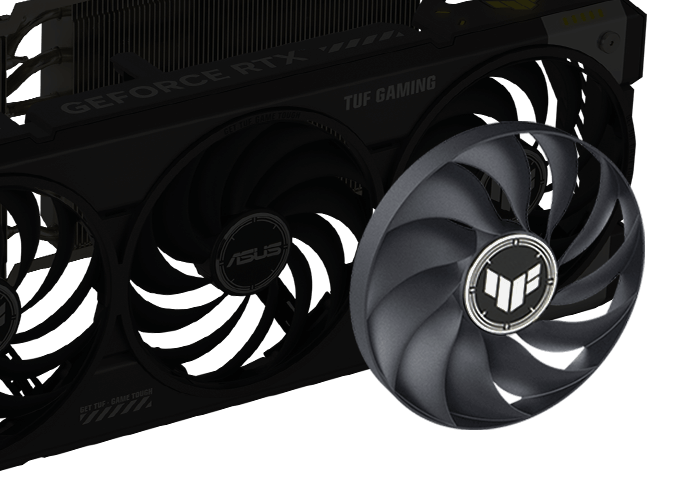

A fast and feature-rich 1440p GPU held back by 12GB capacity and a launch price that demanded more. NVIDIA GeForce RTX 5070 arrived as an upper-mainstream card aimed at high-refresh 1440p gaming, with enough performance for selective 4K use. Its official $549 US and £539 UK launch prices put it in a demanding part of the market: expensive enough that buyers should expect strong native performance and longevity, but below the larger 16GB and flagship cards.
This is an evidence-based editorial review. 5000 Series has not tested this graphics card directly. We compare NVIDIA’s official specification with independently published benchmark results, power observations and longer-term context. Manufacturer claims are identified as features or claims; they are not treated as equivalent to like-for-like independent measurements.
RTX 5070 review: the short version
The RTX 5070 is a good graphics card inside an awkward product proposition. It is fast enough to make high-refresh 1440p the natural target, efficient enough for a sensible mainstream system and supported by the strongest all-round feature ecosystem in the market. Twelve gigabytes and the limited native uplift keep it from being an uncomplicated recommendation at full launch pricing.
- Best suited to high-refresh 1440p gaming
- Strong ray tracing, DLSS 4, Reflex, NVENC and CUDA support
- Compact and manageable 250W reference design
- 12GB is the main long-term concern
- Street price determines whether it beats 16GB alternatives on value
How this evidence-based review was produced
Our assessment separates three kinds of evidence. Official material establishes fixed details such as core configuration, memory, outputs and reference power. Independent testing establishes measured behaviour. Our score and verdict are then an original editorial judgement about performance, features, design and value. This prevents a manufacturer slide or a generated-frame multiplier from being presented as if it were a neutral benchmark.
Benchmark results can differ with CPU, driver, game patch, scene, preset and card model. For that reason we use multi-game averages for broad positioning, then discuss limits rather than claiming a single universal percentage. The charts attached to this review identify the source methodology and normalise the comparison so that the relationship is easier to read; 5000 Series did not run those tests.
Sources were accessed on 3 September 2026. The specification is stable, but drivers, availability and pricing can change. Launch MSRP is retained because it shows the original value proposition. The linked retailer checks are non-affiliate links and should be used to confirm today’s price immediately before purchase.
Launch context and market position
NVIDIA GeForce RTX 5070 launched on 5 March 2025 as the least expensive desktop model in NVIDIA’s first RTX 50 wave. It followed unusually ambitious messaging around DLSS 4 and Multi Frame Generation. Those features are technically important, but they also make clear communication essential: a generated frame can improve visual smoothness, while native rendering performance still determines responsiveness, image stability and how useful frame generation feels.
The card’s place is best understood as premium 1440p rather than “flagship performance for everyone.” At 1080p, a fast CPU can limit gains and the GPU may be more expensive than necessary. At 4K, it can be effective with appropriate settings and upscaling, but 12GB and the gap to RTX 5070 Ti become more visible. Its centre of gravity is a 1440p high-refresh monitor.
Launch conditions also matter. A product reviewed at MSRP can look very different when supply pushes partner cards higher, or when a rival is discounted. Our score therefore reflects the card’s intended launch proposition and its structural strengths and weaknesses; the buying recommendation tells you how to adjust that judgement for a live price.
Specifications and architecture
NVIDIA GeForce RTX 5070 uses NVIDIA’s Blackwell architecture on the TSMC 4N process. The reference configuration provides 6,144 CUDA cores, 48 RT cores and 192 Tensor cores. Official clocks are 2.33GHz base and 2.51GHz boost. It carries 12GB of 28Gbps GDDR7 across a 192-bit interface for 672GB/s of rated bandwidth.
That specification is balanced toward modern shader performance and AI-assisted graphics rather than a simple doubling of traditional resources. Blackwell’s Tensor and RT changes support neural rendering features, while GDDR7 raises data rate. Nevertheless, physical resources and memory capacity continue to matter. Software cannot make a constrained workload disappear; it can only change how the available resources are used.
The board is rated at 250W, with 650W recommended system power. Display connectivity includes three DisplayPort 2.1b outputs and one HDMI 2.1b port. PCI Express Gen 5 support is useful for platform compatibility, although ordinary gaming performance is not transformed simply because the slot uses a newer generation.
12GB GDDR7: fast memory, limited margin
Twelve gigabytes is the review’s central caveat. It is enough for a large share of current 1440p games, but this price tier is bought with several years of use in mind. High-resolution textures, large shader caches, ray-tracing data and frame-generation resources can all increase allocation. A 16GB rival does not automatically run faster, but it supplies more margin before capacity becomes the constraint.
Memory speed and memory capacity solve different problems. The 672GB/s rated bandwidth helps feed the GPU quickly when required data is resident. Capacity determines how much of that data can remain local. If a game needs more than the available pool, it may lower texture residency, stream over the PCIe bus or stutter. The symptom depends on the engine, which is why one comfortable benchmark does not prove every future game will be comfortable.
For competitive games, lighter titles and sensible 1440p settings, 12GB should not be treated as an immediate failure. The concern is product positioning: at this price, buyers reasonably want headroom. The practical response is to compare the RTX 5070 with 16GB alternatives, and to avoid paying a large premium for a factory-overclocked 12GB card whose small clock gain cannot alter the memory ceiling.
Rasterised gaming performance
Published multi-game evidence consistently places the RTX 5070 ahead of the RTX 4070 at 1440p, but the gain is evolutionary rather than a wholesale change of class. TechSpot’s later cross-generation testing measured the RTX 5070 around 20% ahead of the RTX 4070 at 1440p and 22% at 4K under its chosen high/ultra test set. Those averages are useful positioning evidence, not a promise for every title.
The resolution pattern is informative. Lower resolutions create more CPU-limited results and compress differences between fast GPUs. At 4K, the GPU does more work per frame and relative gaps can expand, but memory demand also rises. A 4K average therefore shows the RTX 5070’s compute position while not guaranteeing that every maximum-texture workload will remain free of capacity pressure.
Individual games can sit above or below the average because engines respond differently to bandwidth, cache, drivers and shader architecture. Buyers should look for tests covering their own games, especially simulation, competitive and heavily modded titles. The most useful conclusion is not an exact universal lead; it is that the RTX 5070 is a clear but moderate step over RTX 4070-class performance and remains well below the 16GB RTX 5070 Ti.
Ray tracing performance
Ray tracing is one of the stronger reasons to choose the card over a similarly priced raster-first alternative. Blackwell’s RT hardware, DLSS Ray Reconstruction and mature game support can produce an excellent 1440p experience, yet the combination of heavy effects and a 12GB buffer means the most aggressive presets may still require texture or upscaling decisions.
Ray tracing value depends on the games you play. A hybrid title using a few effects can run comfortably, while path tracing may need DLSS reconstruction and frame generation. NVIDIA’s advantage is not only raw RT throughput: broad support for DLSS, Ray Reconstruction and Reflex makes the feature chain easier to use in many high-profile releases. That ecosystem has genuine value when the implementations are good.
There is still no reason to enable every effect automatically. Reflections or lighting can improve image quality substantially; other settings may carry a large cost for a subtle difference. Start with a stable native or upscaled base frame rate, then add effects selectively. This produces a more responsive result than using Multi Frame Generation to disguise a weak base.
DLSS 4 and Multi Frame Generation
DLSS Super Resolution reconstructs a higher-resolution image from a lower internal resolution, while Frame Generation inserts synthesised frames between rendered frames. Multi Frame Generation can generate more than one frame per rendered frame on supported RTX 50 hardware. These are separate tools with separate trade-offs, even when a benchmark places them in one large FPS number.
The best case is a demanding 1440p or 4K game with a solid base frame rate, a high-refresh display and a good implementation. Displayed motion can become much smoother. The weaker case is a low native frame rate where controls still feel slow, artefacts become easier to notice and the generated output exaggerates what the underlying GPU can deliver. Reflex can reduce latency in supported titles but cannot make generated frames equivalent to native input samples.
Our score credits the breadth and quality of NVIDIA’s feature set, while the performance judgement remains anchored in non-generated results. That distinction protects buyers from comparing an RTX 5070 using several generated frames with a rival using native rendering and concluding that the products are directly equivalent.
Power, thermals and acoustics
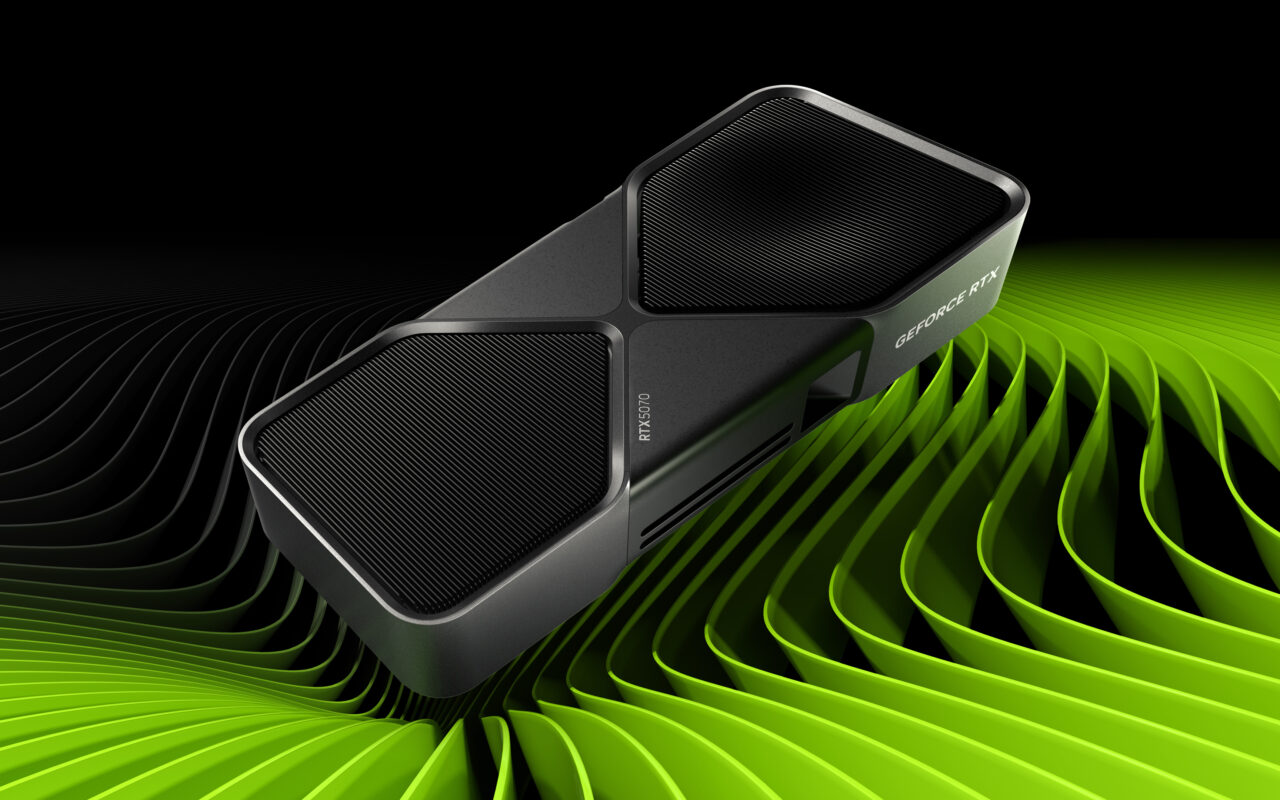
At 250W, the RTX 5070 is neither an ultra-low-power card nor difficult to integrate. A quality 650W supply is NVIDIA’s reference recommendation. The Founders Edition’s two-slot format is unusually compact for the performance level, although partner boards can be much larger. Buyers using an adapter should fully seat the connector and avoid a hard bend immediately at the plug.
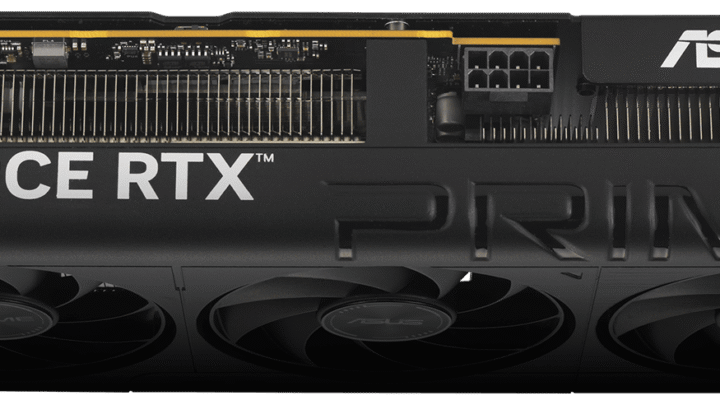
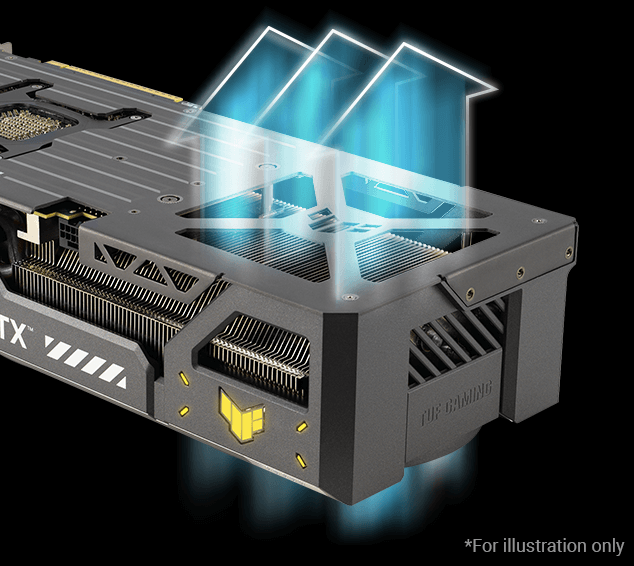
Thermal and acoustic behaviour varies more by board than the GPU name suggests. A large triple-fan partner card may run cooler or quieter than the compact reference design, but it can occupy more slots and cost more. Review the exact SKU, not only a generic RTX 5070 result, when case clearance or noise is important.
Efficiency should be judged as performance per watt, not only the maximum board number. A frame cap, sensible voltage curve or lower power limit can reduce consumption in games where full output is unnecessary. Those adjustments are optional and should be stability-tested; the standard specification already defines the performance a retail buyer is entitled to expect.
Design, ports and installation
The Founders Edition measures about 242 by 112mm and uses a two-slot format, making it unusually easy to place in a conventional case. Partner models range from compact dual-fan boards to thicker premium coolers. Check the case’s supported GPU length, the room below the card, front-radiator interference and the route for the power cable.
three DisplayPort 2.1b outputs and one HDMI 2.1b port provide modern monitor support, including high refresh rates and high resolutions within the relevant standards. The card can drive several displays, but maximum combinations depend on bandwidth, colour depth, compression and refresh rate. Confirm the display manufacturer’s port requirements for an unusually demanding multi-monitor layout.
NVIDIA permits either the supplied adapter from two PCIe 8-pin leads or a suitable 300W-or-higher PCIe Gen 5 cable on the reference design. Use the PSU manufacturer’s cable, never mix modular cables from different power supplies, ensure the plug is fully inserted and leave enough side-panel clearance for a gentle cable route.
Creator, streaming and AI use
A ninth-generation NVENC encoder and sixth-generation NVDEC decoder support modern media workflows including AV1. OBS, editing applications and transcoders can benefit when they expose the appropriate hardware path. Quality, supported formats and the number of simultaneous sessions depend on the application and its current version.
CUDA remains a major advantage in software built around NVIDIA’s ecosystem. The RTX 5070 can accelerate rendering, effects, development and local AI workloads, but 12GB is again the constraint to examine first. A workload that does not fit cannot use the GPU’s compute resources efficiently. Professional buyers should check model size, precision, batch requirements and the vendor’s supported-GPU documentation.
For mixed gaming and light creator use, the card is versatile. For memory-heavy 3D scenes, high-resolution video work or local models, a 16GB or larger card may be the better investment even when its gaming benchmark is similar. Capacity is a workflow requirement, not an abstract future-proofing slogan.
UK and US price analysis
At its launch MSRP, the card’s value case was contested because 12GB and a moderate native generational uplift sat beside a premium feature set. Value changes quickly with street price: a meaningful discount strengthens the RTX 5070, while a 16GB RX 9070 or a faster RTX 5070 Ti at a small premium weakens it. Compare the complete delivered price, not a headline that excludes VAT or shipping.
The UK price includes VAT, whereas US headline MSRP generally excludes local sales tax. Currency conversion alone therefore produces a misleading comparison. UK buyers should compare the delivered VAT-inclusive price and warranty support; US buyers should include state tax and shipping. Premium partner cards must justify their extra cost with noise, cooler, size or warranty benefits rather than a tiny factory overclock.
Because graphics-card prices can change daily, this review does not present a stale retailer figure as current. The Product page records launch pricing and provides clearly labelled plain links to UK and US retailer searches. 5000 Series receives no commission from those links at present.
RTX 5070 alternatives
The Radeon RX 9070 is the direct alternative: it offers 16GB and strong raster performance, while the RTX 5070 counters with the GeForce software ecosystem, generally stronger ray-tracing support and broad CUDA compatibility. The RTX 5070 Ti is a materially faster, 16GB step-up, but only makes sense when its street-price premium remains proportionate. Discounted RTX 4070 Super stock is also relevant for a cheaper 1440p build.
Against Radeon RX 9070
The RX 9070’s 16GB buffer and strong raster positioning are its clearest arguments. The RTX 5070’s counter is a more mature suite of proprietary gaming and creator features, often stronger ray tracing and CUDA support. The better choice depends on actual price and whether those features are central to your use rather than occasionally interesting.
Against RTX 5070 Ti
The Ti model is faster and carries 16GB, making it structurally more comfortable for 4K and long-term premium use. It also costs more and usually consumes more power. A small street-price gap favours the Ti; a large gap restores the standard 5070’s role as the sensible 1440p card.
Against RTX 4070 Super
The RTX 4070 Super lacks the newest Blackwell frame-generation path and display outputs, but discounted stock can still deliver good 1440p performance. The RTX 5070 is faster and more current. The comparison only becomes difficult when the older card is substantially cheaper with a full warranty.
Who should buy the RTX 5070?
Buy it for a modern 1440p system when NVIDIA’s ray tracing, DLSS, Reflex, NVENC or CUDA ecosystem matters and the actual price is competitive. It also suits compact Founders Edition builds and users moving from much older midrange hardware.
- 1440p high-refresh gamers upgrading from RTX 20/30 or older midrange hardware
- Players who use ray tracing and DLSS in supported games
- Streamers and creators who benefit from NVENC, AV1 or CUDA
- Builders who value the compact Founders Edition form factor
- Buyers who find it clearly below 16GB step-up cards in delivered price
Who should look elsewhere?
Do not buy it purely because generated-frame marketing compares it with a former flagship. Native performance, latency and image quality still matter. Buyers who prioritise maximum texture headroom, open software stacks or value per rasterised frame should compare 16GB Radeon options.
- Existing RTX 4070-class owners seeking a dramatic native uplift
- 4K maximum-texture buyers who want more than 12GB
- Value-first raster gamers offered a well-priced 16GB Radeon
- Heavy local-AI or creator users whose projects exceed 12GB
- Shoppers facing inflated partner-card pricing near RTX 5070 Ti territory
Long-term ownership considerations
Driver support, game patches and upscaler updates can improve results after launch, but they do not change the physical memory capacity. Keep drivers current after checking release notes, use a known-good version for critical work and revisit per-game settings after a major patch. Newer is not automatically better for every application on day one.
Warranty quality belongs in the purchase decision because most RTX 5070 cards are partner designs. Check warranty length, regional return route and whether registration is required. Avoid assuming that a retailer image represents the exact revision; connector location, cooler and included adapter can change between SKUs.
For resale, the recognised GeForce brand and broad software compatibility may help, while 12GB could become a stronger objection over time. A sensible purchase price and a well-maintained card matter more than paying extra for a minor factory overclock that has little effect on real-world lifespan.
Retailer offers
Where to buy
Prices and availability are checked manually and may change. Confirm the final price with the retailer before buying.
Affiliate disclosure: We may earn a commission from qualifying purchases made through marked links, at no extra cost to you.
International / other
-
Scan UK Availability not confirmedCheck retailer for current price Last checkedCheck UK price (non-affiliate) (opens in a new tab)
-
Overclockers UK Availability not confirmedCheck retailer for current price Last checkedCheck UK price (non-affiliate) (opens in a new tab)
-
Newegg US Affiliate link Availability not confirmedCheck retailer for current price Last checkedCheck current price at Newegg (opens in a new tab)
-
B&H Photo Video Availability not confirmedCheck retailer for current price Last checkedCheck US price (non-affiliate) (opens in a new tab)
Final verdict
The RTX 5070 is a good graphics card inside an awkward product proposition. It is fast enough to make high-refresh 1440p the natural target, efficient enough for a sensible mainstream system and supported by the strongest all-round feature ecosystem in the market. Twelve gigabytes and the limited native uplift keep it from being an uncomplicated recommendation at full launch pricing.
Our 74/100 score reflects strong performance and an excellent feature set, reduced by capacity and value concerns. It is a positive score with clear conditions, not a rejection of the hardware. If the RTX 5070 is priced sensibly against the RX 9070 and RTX 5070 Ti, it is an easy card to use and enjoy at 1440p. If it is priced like a 16GB step-up model, the compromise becomes difficult to defend.
Source transparency
Official specifications: NVIDIA GeForce RTX 5070 family. Independent launch assessment: TechSpot RTX 5070 review. Longer-term cross-generation performance context: TechSpot RTX 70-series comparison. These external sources retain ownership of their testing and words; this page summarises and attributes the evidence rather than reproducing their articles.