RX 9070 vs RX 9070 XT: quick answer
Choose the RX 9070 XT when its delivered-price premium is modest and you want the extra gaming performance. Choose the RX 9070 when it is substantially cheaper or a lower-power build matters more than squeezing out the last few frames. Both have 16GB, so this is a decision about speed, price and the exact board rather than buying a bigger memory buffer.
Our starting point is to consider the XT at a premium around 10–12%, then check your games, PSU and case. This is an editorial value rule informed by the cited average performance gap, not a promise that every game improves by that amount. At a much larger premium, the standard card deserves a closer look.
Choose the RX 9070 if…
- Its final delivered price is clearly lower.
- You prefer its lower reference power rating.
- It already meets your frame-rate target.
Choose the RX 9070 XT if…
- The price premium is close to the measured uplift that matters to you.
- You want more headroom for demanding 1440p or 4K gaming.
- Your PSU, cooling and case suit the exact card.
Specifications compared
| Specification | Radeon RX 9070 | Radeon RX 9070 XT | Why it matters |
|---|---|---|---|
| Architecture | RDNA 4 | RDNA 4 | The same generation of core Radeon features |
| Compute units | 56 | 64 | The XT has more rendering resources |
| Stream processors | 3,584 | 4,096 | Core count is one contributor, not a complete performance prediction |
| Reference boost clock | Up to 2,520MHz | Up to 2,970MHz | Partner boards and actual operating clocks vary |
| Memory | 16GB GDDR6 | 16GB GDDR6 | The XT does not add capacity |
| Memory bus | 256-bit | 256-bit | No capacity or bus-width upgrade from choosing XT |
| Typical board power | 220W | 304W | An 84W rating gap, not a fixed gaming-power difference |
| AMD minimum PSU guidance | 650W | 750W | Use exact board guidance and account for the complete PC |
See the exact card designs
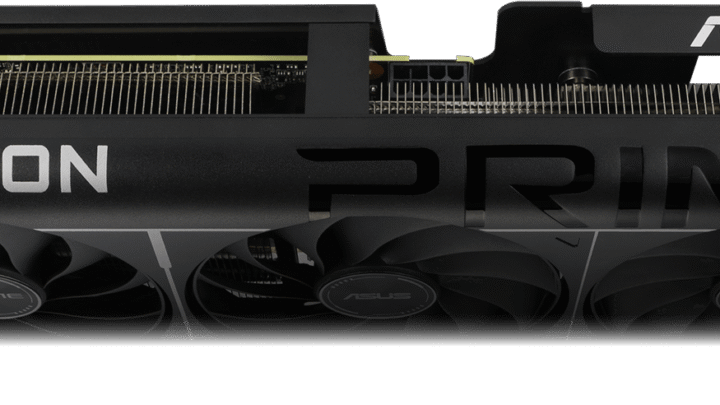
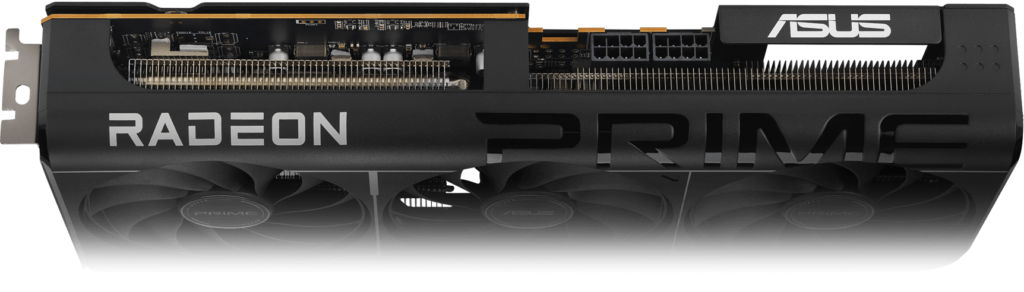
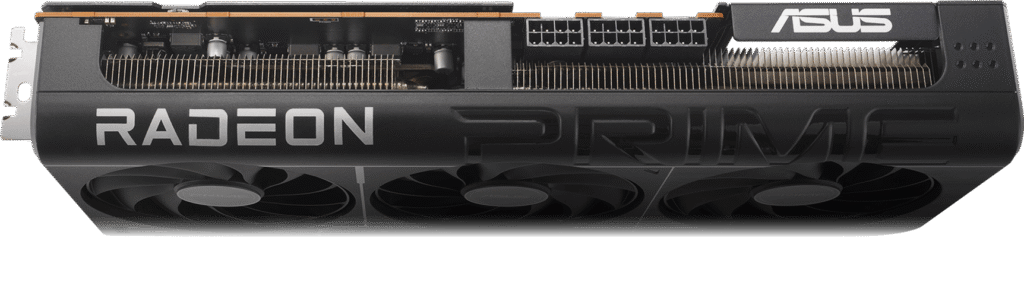
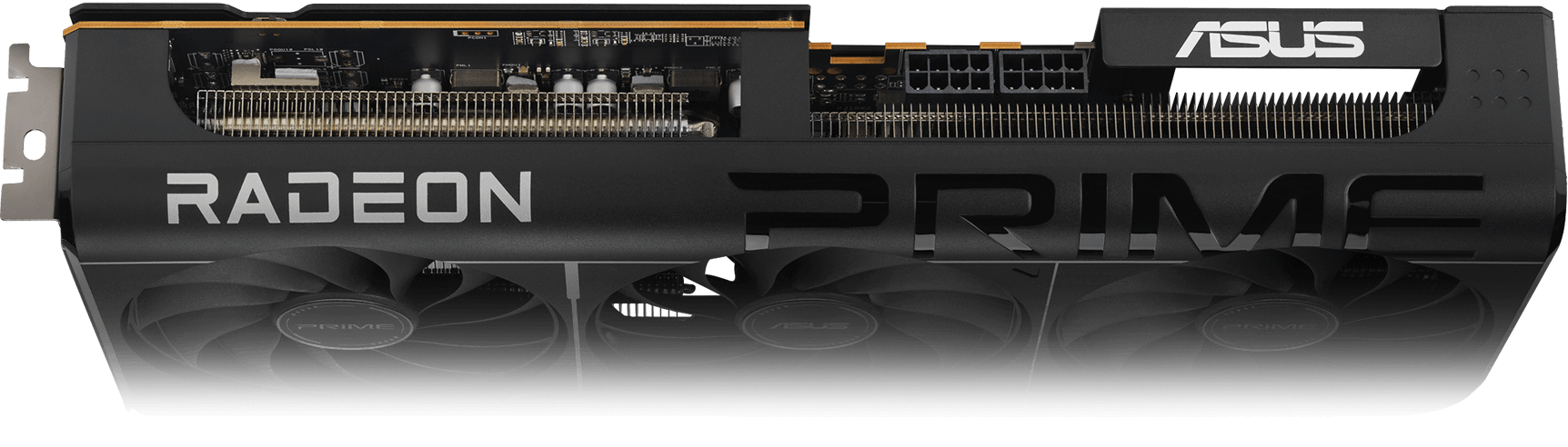
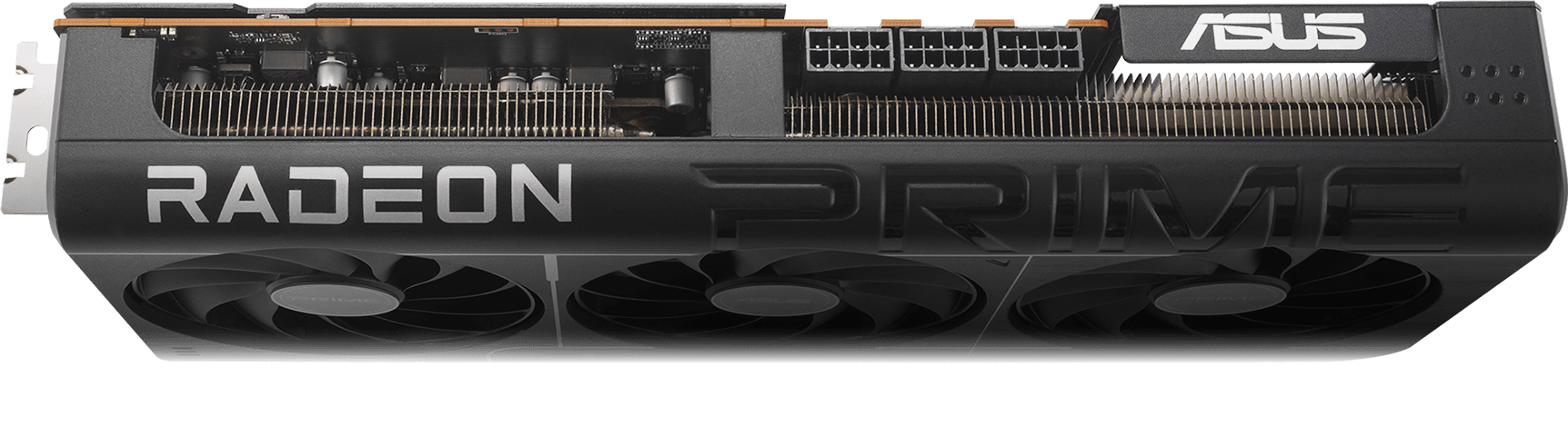
These official ASUS illustrations show the Prime RX 9070 EVO and Prime RX 9070 XT designs used as retail examples on this site. They are not a claim that the cited independent testing used these exact boards. Confirm the retailer’s full SKU, cooler dimensions and connector arrangement before ordering.
Gaming performance at 1440p and 4K
5000 Series has not directly benchmarked these cards. TechSpot’s direct comparison, published 25 August 2026, reported a 12% average XT lead at both resolutions across 52 games. Its setup used a Ryzen 7 9800X3D, DDR5-6000 CL30, Windows 11 25H2 and Radeon driver 26.7.1 WHQL, with Resizable BAR enabled. This is dated evidence, not a fresh driver retest.
| Test scope | RX 9070 baseline | RX 9070 XT | Reading the result |
|---|---|---|---|
| 52-game average at 1440p | 100 | 112 | 12% higher average performance in this sample |
| 52-game average at 4K | 100 | 112 | The same aggregate lead at a different resolution |
At a glance: about 12% more average performance
RX 9070
Baseline
RX 9070 XT
About 12% ahead
For a purchase decision, begin with the frame rate you need. Extra GPU performance is useful if it moves a game from below your target to comfortably above it. It is less valuable when both cards already saturate your monitor or the game is limited by the CPU.
A broad average also hides variation. Use it to judge the rough scale of the upgrade, then check individual games before deciding that a particular price premium is justified. Do not combine this average with unrelated launch tests to create an invented larger dataset.
1% lows and demanding game settings
| Matched example from the same review | 1440p XT advantage: average / 1% low | 4K XT advantage: average / 1% low |
|---|---|---|
| Spider-Man 2, Very High | 10% / 21% | 14% / 21% |
| Spider-Man 2, Ray Tracing Ultimate | 12% / 22% | 29% / 26% |
The slower portion of a run can matter more to perceived smoothness than a small difference in average FPS. A stronger 1% low can make busy scenes feel more consistent, but it does not describe every hitch or prove that a particular frame-rate target was reached. Look at the source’s absolute results and footage as well.
For repeatable comparisons, match the preset, resolution, upscaling mode and ray-tracing settings. If one configuration changes any of those, treat it as a different experience rather than an isolated GPU-speed comparison. A percentage lead can be large while both cards remain below your preferred minimum.
1440p: when the standard RX 9070 is enough
The RX 9070 deserves consideration for a 1440p system with a firm budget, particularly when a discount creates a meaningful gap. If it can sustain the settings and refresh rate you want, spending the saving on a better monitor, storage or simply keeping it may be more useful.
Check CPU-heavy games separately. A faster GPU cannot automatically improve a CPU-limited scene. Competitive presets that reduce GPU load can make the XT less useful than a high-quality benchmark suggests. This is why a high-refresh buyer should examine the exact games and settings rather than only the screen resolution.
The XT makes more sense if you expect to use heavier effects, demand more headroom or prefer to keep the card longer without reducing settings. That is a preference for additional rendering resources, not a guarantee of future performance.
4K: more performance, the same 16GB capacity
At 4K, focus on whether either card can deliver a satisfactory base frame rate at settings you would actually use. The XT provides additional processing headroom, but it still has the same memory capacity. Buying XT does not double texture storage or remove every memory-related limit.
Try sensible presets before treating maximum settings as mandatory. Reducing a costly effect can produce a better experience than paying more for a small improvement at an unnecessarily demanding preset. Equally, if native 4K with heavy ray tracing is essential, consider whether both cards fall short and a different class of GPU is needed.
If you plan to use upscaling, evaluate the image in motion. Internal rendering resolution, reconstruction and the game’s implementation influence the result. Keep those choices consistent when comparing the cards.
Ray tracing, FSR and frame generation
These GPUs share the RDNA 4 generation, so there is no general feature-family upgrade from the XT suffix. Check the game and current AMD support information for the specific FSR, ray-tracing and latency options you intend to use. Feature availability and usable performance are separate questions.
Frame generation can make displayed motion smoother when the underlying game already runs well. It is not a substitute for responsive input or stable base frame times. Compare the rendered frame rate first, then assess the generated output and visual artifacts.
Our RTX 5070 vs RX 9070 guide and RTX 5070 Ti vs RX 9070 XT comparison cover NVIDIA alternatives. They are useful if the software ecosystem is the deciding factor rather than the gap between these two Radeons.
Power, cooling, PSU and case fit
AMD’s 220W and 304W ratings make the non-XT a sensible starting point for a build where heat output or power limits matter. They do not establish a measured 84W difference in your games. Factory overclocks, power profiles and workload all affect actual draw.
For illustration, an actual 80W difference sustained for three gaming hours per day would use about 87.6kWh more electricity per year. Multiply that by your own tariff to estimate the cost. This is an arithmetic scenario, not measured consumption for these cards.
Use the card manufacturer’s PSU advice alongside your CPU and other components. Check available connectors and follow the PSU and board manuals for cabling. Do not assume that an existing PSU is suitable solely because its headline wattage meets a reference recommendation.
Measure the space with case fans, radiators and drive cages installed. A cooler’s thickness can obstruct nearby expansion slots, and a power cable needs room beyond the card’s body. Noise also depends on fan tuning and case airflow; the model with the larger cooler is not automatically quieter.
UK and US prices: how much extra is XT worth?
The examples below compare purchase prices. A 10% premium means paying 10% more for the XT than for the standard RX 9070. It does not mean 10% more gaming performance.
The prices below are examples, not verified live offers. Search listings alone do not verify the selected variant, checkout shipping or tax. The retailer panels provide places to check current offers; the examples below are explicitly hypothetical.
| Illustration only | RX 9070 delivered | RX 9070 XT delivered | Extra price for XT |
|---|---|---|---|
| UK: XT costs 10% more | £500 | £550 | £50 / 10% |
| UK: XT costs 20% more | £500 | £600 | £100 / 20% |
| US: XT costs 10% more | $600 | $660 | $60 / 10% |
| US: XT costs 20% more | $600 | $720 | $120 / 20% |
Calculate the XT premium as (XT delivered total minus standard delivered total) divided by the standard delivered total. Compare like-for-like condition, warranty and seller reliability. An open-box card may be attractive, but its price should not be presented as directly equivalent to sealed new stock.
Using a 12% performance advantage as an illustration, a 10% price premium gives the XT slightly better performance per pound or dollar: 1.12 divided by 1.10 is about 1.018. At a 20% premium, that ratio is about 0.933, favouring the standard card on this narrow measure. Your own games and electricity costs can change the broader value judgement.
Around 10–12% is therefore a useful place to start investigating the XT. At 15% or more, look for a specific benefit that matters to you rather than assuming the upgrade is automatically worthwhile. These are editorial decision aids, not universal cutoffs. If both cards are overpriced, compare alternatives or wait.
Your buying decision at a glance
Start with the final delivered price gap.
Small XT premium?
Consider RX 9070 XT
Around 10–12% extra is a useful starting point. Check whether your games benefit and your PSU and cooling suit the board.
Large saving or lower power?
Consider RX 9070
Keep the same 16GB capacity. Choose it when the saving matters more than the additional speed or lower rated power is a priority.
Which Radeon should you buy?
Buy the RX 9070 XT at a modest premium for extra headroom
Choose the XT when its final premium is close to the performance benefit in your games, you can afford the difference and your build suits its power and cooling needs. It is the stronger speed choice, but the exact retail model still matters.
Buy the RX 9070 at a substantial discount or for lower rated power
Choose the standard card when its saving is large enough to outweigh the extra speed or when the lower power target fits your priorities better. You retain 16GB and the same core Radeon feature generation. Avoid paying XT-like money for a premium non-XT cooler unless you specifically need that model’s dimensions or noise characteristics.
Keep your existing card if the upgrade is too small
If you already own either card, moving sideways within this pair may deliver too little improvement for the net cost. Include resale fees and warranty differences. Upgrade to solve a repeatable limitation rather than because a neighbouring model exists.
Retailer offers
Where to buy the RX 9070 16GB and RX 9070 XT 16GB
Compare current retailer availability for each card. Prices can change, so confirm the final total before buying.
RX 9070 16GB
RX 9070 16GB offers
Prices and availability are checked manually and may change. Confirm the final price with the retailer before buying.
Affiliate disclosure: We may earn a commission from qualifying purchases made through marked links, at no extra cost to you.
United Kingdom
-
Amazon UK — ASUS Prime RX 9070 16GB OC EVO Affiliate link Availability not confirmedCheck retailer for current price Last checkedCheck current price at Amazon UK (opens in a new tab)
United States
-
Amazon US — ASUS Prime RX 9070 16GB OC EVO Affiliate link Availability not confirmedCheck retailer for current price Last checkedCheck current price at Amazon US (opens in a new tab)
International / other
-
Scan UK Availability not confirmedCheck retailer for current price Last checkedCheck UK price (non-affiliate) (opens in a new tab)
-
Overclockers UK Availability not confirmedCheck retailer for current price Last checkedCheck UK price (non-affiliate) (opens in a new tab)
-
Newegg US Affiliate link Availability not confirmedCheck retailer for current price Last checkedCheck current price at Newegg (opens in a new tab)
-
B&H Photo Video Availability not confirmedCheck retailer for current price Last checkedCheck US price (non-affiliate) (opens in a new tab)
RX 9070 XT 16GB
RX 9070 XT 16GB offers
Prices and availability are checked manually and may change. Confirm the final price with the retailer before buying.
Affiliate disclosure: We may earn a commission from qualifying purchases made through marked links, at no extra cost to you.
United Kingdom
-
Amazon UK — ASUS Prime RX 9070 XT 16GB OC Affiliate link Availability not confirmedCheck retailer for current price Last checkedCheck current price at Amazon UK (opens in a new tab)
United States
-
Amazon US — ASUS Prime RX 9070 XT 16GB OC Affiliate link Availability not confirmedCheck retailer for current price Last checkedCheck current price at Amazon US (opens in a new tab)
International / other
-
Scan UK Availability not confirmedCheck retailer for current price Last checkedCheck UK price (non-affiliate) (opens in a new tab)
-
Overclockers UK Availability not confirmedCheck retailer for current price Last checkedCheck UK price (non-affiliate) (opens in a new tab)
-
Newegg US Affiliate link Availability not confirmedCheck retailer for current price Last checkedCheck current price at Newegg (opens in a new tab)
-
B&H Photo Video Availability not confirmedCheck retailer for current price Last checkedCheck US price (non-affiliate) (opens in a new tab)
Final verdict
RX 9070 XT is the performance choice at a modest delivered-price premium; RX 9070 is the value alternative when discounted enough or when lower rated power is a priority. Both offer 16GB. Decide using the exact offers, your games and your complete build.
RX 9070 vs RX 9070 XT FAQs
Does the RX 9070 XT have more VRAM?
No. Both have 16GB GDDR6. The main differences are GPU resources, clocks and power limits.
How much faster is the XT?
The cited August 2026 test reports about 12% higher average performance at both 1440p and 4K. Individual games and settings vary, so it is not a guaranteed uplift.
Is the standard RX 9070 a better buy at 20% less?
It deserves serious consideration at a large saving. Compare the actual delivered-price premium, your required frame rate, warranty and complete system cost.
Will my current PSU work?
Check its quality, connectors and capacity against the exact card manufacturer’s advice and your other components. AMD’s reference guidance differs between the two models.
Can tuning turn an RX 9070 into an XT?
Do not base a purchase on that assumption. Tuning outcomes vary, and the standard model does not gain the XT’s additional GPU resources. Compare stock operation first.
Should I upgrade from an RX 9070 to an RX 9070 XT?
Usually only for a specific need at an unusually low net cost. Check whether a larger upgrade would offer better value after resale and fees.
Related guides and product details
- Read the reviews: RX 9070 review and RX 9070 XT review.
- Check specifications and retailer options: RX 9070 product page and RX 9070 XT product page.
- Compare NVIDIA alternatives: RTX 5070 vs RX 9070 and RTX 5070 Ti vs RX 9070 XT.
- Explore a lower-cost tier: RTX 5060 Ti 16GB vs RX 9060 XT 16GB.