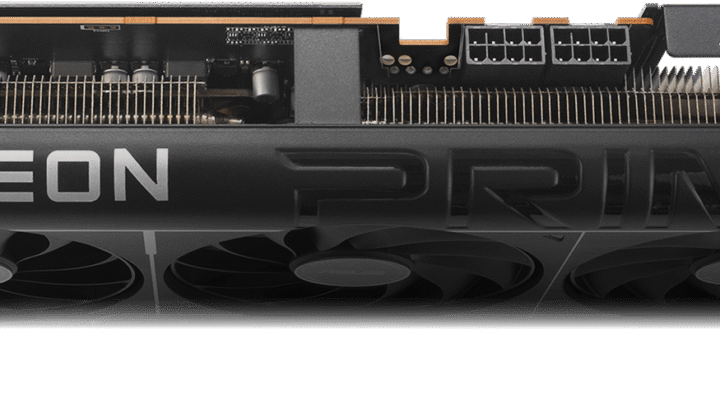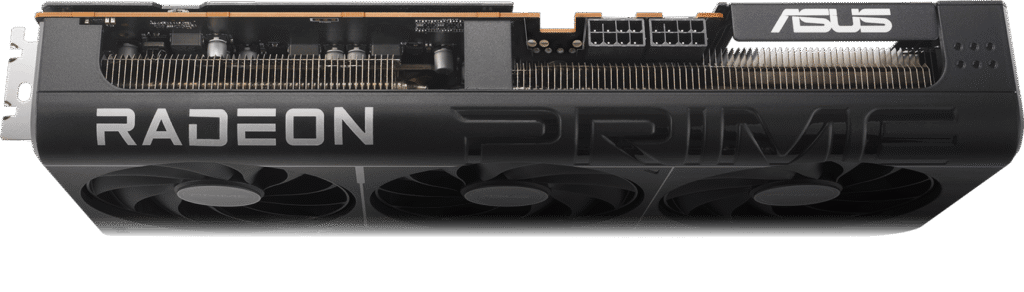
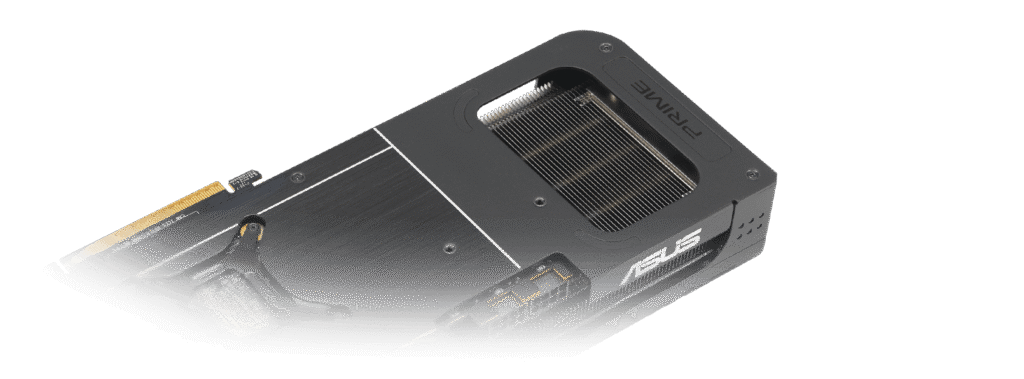
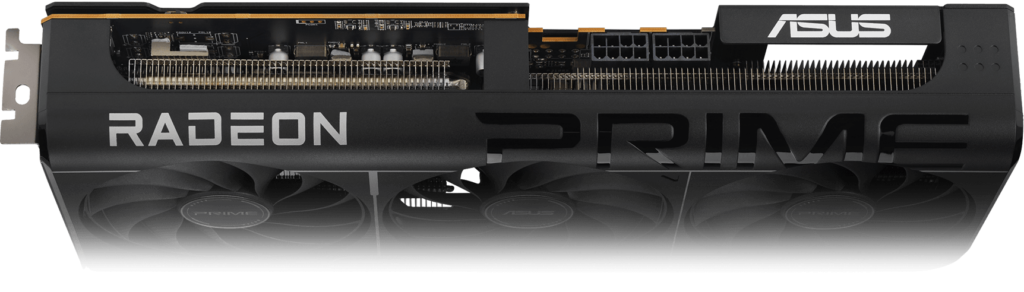
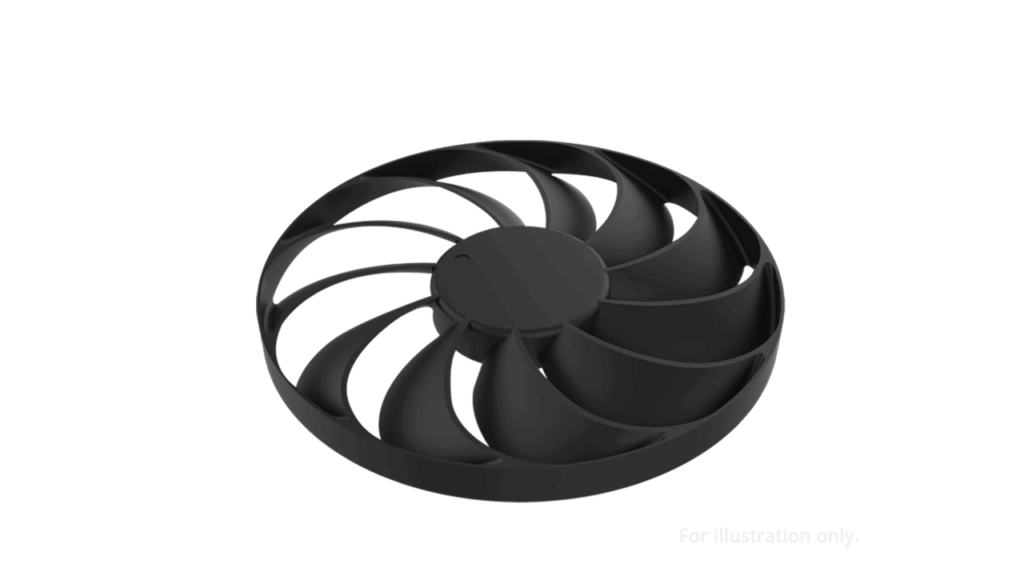
AMD Radeon RX 9070 is a lower-power RDNA 4 card aimed at premium 1440p and entry 4K gaming. This Product record combines the official specification, launch price and practical buying context. The linked 5000 Series Review is evidence-based: we have not tested the card directly and cite the independent measurements used.
Product overview
It retains the XT model’s 16GB memory configuration but reduces compute-unit count, clocks and board power. The result is efficient, capable hardware whose value depends on the actual price gap to the usually faster RX 9070 XT.
The card launched at $549 in the United States and £525 in the United Kingdom. Those are historical launch figures. Partner coolers, factory overclocks, stock and regional tax can produce very different live prices.
Core specifications
- 56 RDNA 4 compute units, 56 ray accelerators and 112 AI accelerators
- 3,584 stream processors
- 16GB GDDR6 on a 256-bit interface
- 20Gbps memory and 640GB/s bandwidth
- 2.07GHz game clock and up to 2.52GHz boost
- 220W typical board power; 650W recommended system supply
Gaming position
It is very strong at 1440p and credible at 4K. Published testing generally places the XT around one performance tier higher, while the standard card wins on efficiency and easier system integration.
The full 16GB buffer and 640GB/s memory bandwidth are valuable because AMD did not cut capacity alongside the core. That gives the card a robust foundation for high-quality textures and newer games.
FSR, ray tracing and media features
The RDNA 4 feature set includes FSR 4 support in compatible titles, hardware ray tracing, HYPR-RX and Anti-Lag. FSR coverage and image quality vary by game version, so individual implementation still matters.
AV1-capable media engines and DisplayPort 2.1a broaden its use for streaming and high-resolution displays. Professional software support should be checked against the buyer’s actual workflow.
Power and compatibility
A 220W rating is one of the card’s strongest practical qualities and a 650W recommendation fits many mainstream systems. Partner cooler size and factory power settings can vary.
The host interface is PCI Express Gen 5 x16 and official display support includes DisplayPort 2.1a and HDMI 2.1b. Physical dimensions, slot thickness and connector placement vary between partner models unless a reference-card size is stated.
Who should consider it?
It suits a buyer wanting 16GB and strong 1440p performance without the XT’s heat and power. If the street-price gap to RX 9070 XT is small, the faster model usually offers the cleaner value case.
The most relevant alternative is RX 9070 XT and NVIDIA RTX 5070, with RTX 5070 Ti as the faster GeForce step-up. Compare real street prices, memory capacity, ray-tracing priorities, software support and power-supply requirements rather than relying on model names alone.
UK and US price checks
The retailer buttons are plain, non-affiliate links. 5000 Series receives no commission from them. They are included so readers can check regional stock and prices while affiliate applications are pending. Future tracked links will be clearly labelled and will not affect the editorial score.
Review and source notes
Read the full AMD Radeon RX 9070 Review for the evidence-based verdict, comparisons, strengths and limitations. The specification was checked against AMD’s official product information; independent benchmark sources are attributed in the Review.
Before ordering
Confirm the exact board model, warranty, return terms and whether the listing is new, open-box, refurbished or used. Launch MSRP is useful for historical comparison, but the value conclusion should always be revisited at the live price available to you.