RTX 5060 Ti 16GB vs RX 9060 XT 16GB: quick answer
Choose the Radeon RX 9060 XT 16GB for conventional 1080p and 1440p gaming when it is substantially cheaper at checkout. In TechSpot’s broad launch sample the RTX 5060 Ti 16GB was only about 1% faster on average at native 1440p, though individual games varied considerably. Both cards have 16GB of graphics memory, so the comparison is less about capacity and more about game performance, features and price.
Choose the GeForce RTX 5060 Ti 16GB if the price gap is modest, you regularly enable demanding ray tracing, or you need NVIDIA’s DLSS, NVENC, CUDA or application-specific support. Neither card is a blanket winner in every game or software workflow.
Choose RX 9060 XT 16GB if…
- Its delivered price is meaningfully lower.
- Native 1440p gaming is your priority.
- Your games run well on Radeon and you do not rely on CUDA.
- A 160W official board rating appeals to your build.
Choose RTX 5060 Ti 16GB if…
- You value stronger performance in demanding ray-traced games.
- Your favourite software requires or favours CUDA or NVENC.
- You prefer DLSS support in the games you actually play.
- Its price is close enough that those benefits justify the premium.
Specifications compared
| Specification | GeForce RTX 5060 Ti 16GB | Radeon RX 9060 XT 16GB | Buying relevance |
|---|---|---|---|
| Architecture | NVIDIA Blackwell | AMD RDNA 4 | Core counts are not comparable across architectures |
| Graphics memory | 16GB GDDR7 | 16GB GDDR6 | Equal capacity, different memory systems |
| Memory interface | 128-bit | 128-bit | Bus width alone does not establish game speed |
| Rated memory bandwidth | 448GB/s | Up to 320GB/s, plus 32MB Infinity Cache | Different cache designs complicate direct comparisons |
| Official board power | 180W total graphics power | 160W typical board power | Different manufacturer definitions; check measured power |
| Recommended system PSU | 600W | 450W | Check the exact partner model and whole system |
| US launch price | $429 | $349 | Historical $80 gap; check current delivered price |
On paper the RTX card has more raw memory bandwidth, but the Radeon also has an Infinity Cache. Neither number alone predicts frame rate. NVIDIA lists 4,608 CUDA cores and a 2.57GHz reference boost clock; AMD lists 32 compute units, 2,048 stream processors and boost frequency up to 3,130MHz. Those are useful within a family, not a cross-vendor performance formula.
See the exact card designs
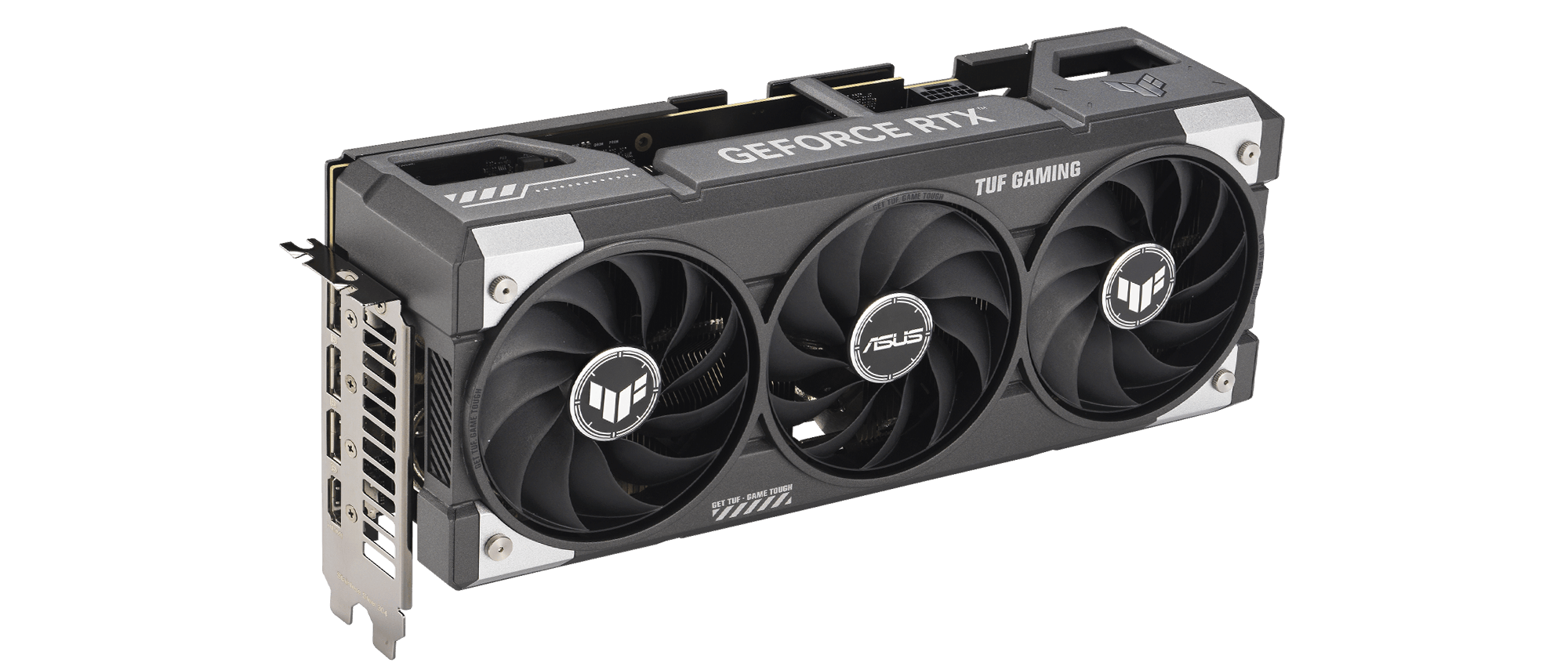
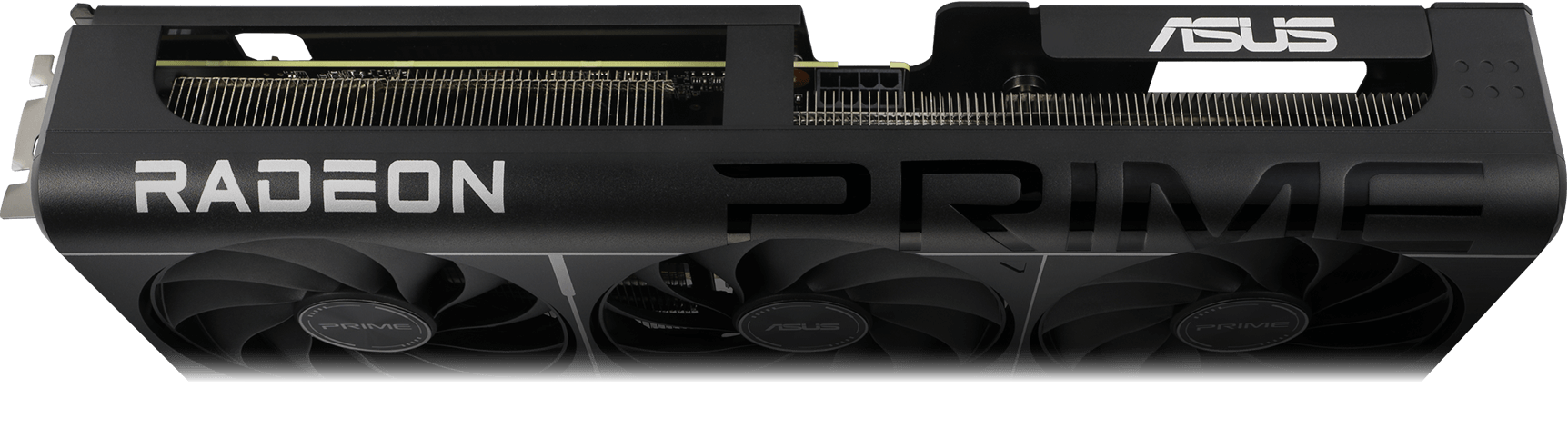
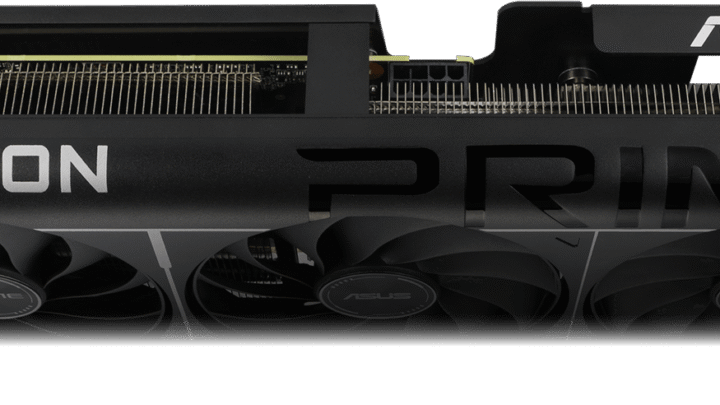
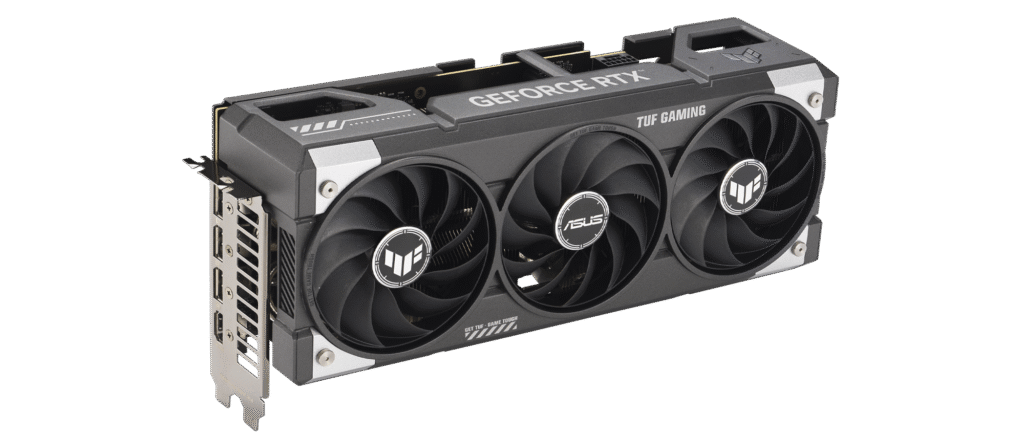
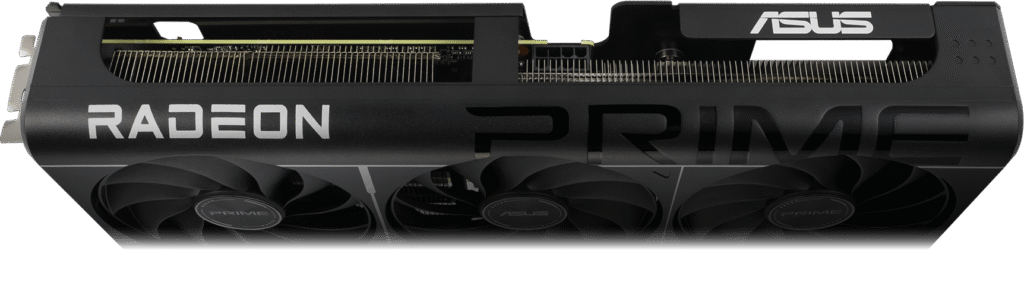
These are illustrations of partner designs already used on the respective 5000 Series product pages, not reference cards. A premium TUF board and a Prime board do not make a controlled cooler or noise comparison. Check each listing’s full model number and memory capacity.
Native gaming performance at 1080p and 1440p
TechSpot’s RX 9060 XT 16GB launch review tested both 16GB cards in the same system and game suite. Its 1080p average placed the Radeon 6% behind the RTX 5060 Ti; at 1440p the Radeon was about one frame or 1% behind. That average hides large per-game swings. TechSpot reported the Radeon substantially ahead in Call of Duty: Black Ops 6, while the GeForce led in Counter-Strike 2 and Space Marine 2 in the cited tests.
Index redrawn from TechSpot’s reported aggregate differences. Each resolution is normalised separately to RTX 5060 Ti = 100; the 1080p and 1440p bars are not absolute FPS and should not be compared across resolutions.
TechSpot’s later 15-game DLSS 4 versus FSR 4 test selected titles supporting both newer upscalers. Its result was more favourable to GeForce because that sample included several GeForce-leaning games and omitted some strong Radeon titles. That is why one suite should not be converted into a universal percentage. Review your own top games at your monitor resolution, paying attention to one-percent lows and tested presets as well as averages.
Ray tracing: the GeForce advantage has limits
Ray tracing is the clearest gaming reason to spend more on the RTX 5060 Ti. In TechSpot’s seven-test ray-tracing sample, the Radeon was about 20% slower overall. The gap was much larger in particularly demanding effects, though some older or lighter ray-traced games were close. Both cards struggled in certain heavy tests without sensible compromises; a lead does not guarantee a smooth result at maximum settings.
Check whether your games use modest reflections, heavy path tracing or a mixture. Compare the same resolution and upscaling quality on both cards, then judge input response as well as the displayed frame rate. Generated frames are valuable when the underlying game already feels responsive; they do not turn an unplayable base frame rate into a good experience.
DLSS, FSR and software support
The RTX 5060 Ti supports NVIDIA’s DLSS feature family, including supported Super Resolution, Ray Reconstruction and Multi Frame Generation modes. The RX 9060 XT supports AMD’s current FSR technologies in compatible titles. Feature support and visual quality depend on the specific game and its implementation. TechSpot’s matched upscaling comparison found that Quality or Balanced modes often made 1440p settings practical on both cards, but the winner changed by title.
For video creation, streaming, rendering or local AI, start with your application’s current support list. NVIDIA’s CUDA ecosystem and NVENC encoder can be decisive for a workflow that uses them; AMD’s AV1 encode and other media capabilities may be sufficient for another. A gaming average does not measure export time or plugin compatibility. Both cards’ 16GB buffers are useful when a project actually needs that capacity.
Power, fit and the exact partner card
NVIDIA rates the RTX 5060 Ti at 180W total graphics power and recommends a 600W system PSU. AMD lists 160W typical board power and a 450W minimum PSU recommendation for the RX 9060 XT. These ratings do not mean the Radeon will draw exactly 20W less in every game. TechSpot measured higher whole-system consumption with its tested Radeon partner cards in several games despite the lower AMD headline board rating. Measurement method, sample board, frame rate and workload matter.
Measure length and slot thickness, confirm the power connector and leave cable clearance before ordering. A quiet premium cooler can change both price and fit. Use a quality PSU appropriate for the full machine and the manufacturer’s approved cable. The two images above show specific ASUS ranges; do not infer their acoustics from GPU family alone.
Price and value in the UK and US
The US launch price was $429 for the RTX 5060 Ti 16GB and $349 for the RX 9060 XT 16GB. The RTX 5060 Ti 16GB launched from £399 in the UK; AMD announced a US suggested price for the RX 9060 XT 16GB but no single official UK suggested price in the cited launch material. At that historical $80 gap, the Radeon’s near-equal native 1440p average made it the stronger value for many gamers. Those numbers are not a current offer, and launch stock or factory-overclocked SKUs may have been priced differently.
- Large Radeon discount: favour RX 9060 XT for native gaming unless you need an RTX-specific feature or application.
- Small price gap: favour RTX 5060 Ti if DLSS, ray tracing or CUDA is useful to you; otherwise use your actual game results to decide.
- Both overpriced: compare neighbouring GPUs rather than assuming either remains good value.
Compare delivered prices and exact 16GB models separately in the UK and US. UK retail prices usually include VAT; US advertised prices may exclude sales tax. Check shipping, returns, warranty, new versus marketplace condition and the complete model code. A bare “9060 XT” or “5060 Ti” listing can be the 8GB variant.
Retailer offers
Where to buy the GeForce RTX 5060 Ti 16GB and Radeon RX 9060 XT 16GB
Compare current retailer availability for each card. Prices can change, so confirm the final total before buying.
GeForce RTX 5060 Ti 16GB
GeForce RTX 5060 Ti 16GB offers
Prices and availability are checked manually and may change. Confirm the final price with the retailer before buying.
Affiliate disclosure: We may earn a commission from qualifying purchases made through marked links, at no extra cost to you.
United Kingdom
-
Amazon UK — ASUS Dual RTX 5060 Ti 16GB OC Affiliate link Availability not confirmedCheck retailer for current price Last checkedCheck ASUS Dual 16GB price at Amazon UK (opens in a new tab)
United States
-
Amazon US — ASUS Dual RTX 5060 Ti 16GB OC Affiliate link Availability not confirmedCheck retailer for current price Last checkedCheck ASUS Dual 16GB price at Amazon US (opens in a new tab)
International / other
-
Scan UK Availability not confirmedCheck retailer for current price Last checkedCheck UK price (non-affiliate) (opens in a new tab)
-
Overclockers UK Availability not confirmedCheck retailer for current price Last checkedCheck UK price (non-affiliate) (opens in a new tab)
-
Newegg US Affiliate link Availability not confirmedCheck retailer for current price Last checkedCheck current price at Newegg (opens in a new tab)
-
B&H Photo Video Availability not confirmedCheck retailer for current price Last checkedCheck US price (non-affiliate) (opens in a new tab)
Radeon RX 9060 XT 16GB
Radeon RX 9060 XT 16GB offers
Prices and availability are checked manually and may change. Confirm the final price with the retailer before buying.
Affiliate disclosure: We may earn a commission from qualifying purchases made through marked links, at no extra cost to you.
United Kingdom
-
Amazon UK — ASUS Prime RX 9060 XT 16GB OC Affiliate link Availability not confirmedCheck retailer for current price Last checkedCheck current price at Amazon UK (opens in a new tab)
United States
-
Amazon US — ASUS Prime RX 9060 XT 16GB OC Affiliate link Availability not confirmedCheck retailer for current price Last checkedCheck current price at Amazon US (opens in a new tab)
International / other
-
Scan UK Availability not confirmedCheck retailer for current price Last checkedCheck UK price (non-affiliate) (opens in a new tab)
-
Overclockers UK Availability not confirmedCheck retailer for current price Last checkedCheck UK price (non-affiliate) (opens in a new tab)
-
Newegg US Affiliate link Availability not confirmedCheck retailer for current price Last checkedCheck current price at Newegg (opens in a new tab)
-
B&H Photo Video Availability not confirmedCheck retailer for current price Last checkedCheck US price (non-affiliate) (opens in a new tab)
Final verdict
Best value for most conventional gamers: Radeon RX 9060 XT 16GB, when substantially cheaper. It pairs the same 16GB capacity with near-equal native 1440p performance in the broad cited test. Best feature and ray-tracing choice: GeForce RTX 5060 Ti 16GB. Its benefits justify a premium when your games or applications actually use them. Check live local prices before making the final call.