RTX 5070 Ti vs RX 9070 XT: quick answer
Choose the Radeon RX 9070 XT when it is substantially cheaper for the exact card you can buy. Both GPUs have 16GB of memory, and TechSpot’s 52-game comparison found only a small aggregate performance gap: the GeForce led by about 1.4% at 1440p and 4% at 4K across its tested mix of presets. Individual games swing much more than those averages. For conventional gaming at a meaningful discount, the Radeon often makes more financial sense.
Choose the GeForce RTX 5070 Ti when the delivered prices are close, your favourite titles use demanding ray tracing or path tracing, or your creator and AI software benefits from CUDA, NVENC and NVIDIA’s software stack. It is also the more efficient card in TechSpot’s testing. Check the applications and games you actually use before paying a large premium for features you may rarely enable.
Choose RX 9070 XT if…
- The final price is meaningfully lower after tax and delivery.
- Conventional 1440p or 4K gaming is the priority.
- Your most-played games perform well on Radeon.
- You do not depend on a CUDA-specific workflow.
Choose RTX 5070 Ti if…
- Heavy ray tracing or path tracing matters in your games.
- You use DLSS features or NVIDIA-specific creator tools.
- Your workload relies on CUDA or the dual NVENC encoders.
- Its actual premium is small enough to justify those benefits.
Specifications compared
| Specification | GeForce RTX 5070 Ti | Radeon RX 9070 XT | Why it matters |
|---|---|---|---|
| Architecture | NVIDIA Blackwell | AMD RDNA 4 | Core counts cannot be compared directly across architectures |
| Memory | 16GB GDDR7 | 16GB GDDR6 | Same capacity; different speed and cache designs |
| Memory interface | 256-bit | 256-bit | Bus width alone does not establish game performance |
| Rated bandwidth | 896GB/s | Up to 640GB/s plus 64MB Infinity Cache | Compare measured games, not one bandwidth figure |
| Compute hardware | 8,960 CUDA cores | 64 compute units / 4,096 stream processors | Different architectures and instruction sets |
| Ray-tracing hardware | Fourth-generation RT cores | 64 ray accelerators | Test actual games and effects, not cross-vendor core counts |
| PCI Express | PCIe 5.0 | PCIe 5.0 x16 | Can operate in older compatible PCIe slots |
| Media | Two ninth-generation NVENC encoders; AV1 | AV1 encode and decode | Check application support for your codec and workflow |
| Official power rating | 300W total graphics power | 304W typical board power | Different definitions; partner cards and games can vary |
| Recommended PSU | 750W system power | 750W minimum PSU | Check the complete system and exact card |
| US launch price | $749 | $599 suggested price | Historical $150 gap; use today’s delivered price |
NVIDIA lists a 2.45GHz reference boost for the RTX 5070 Ti; AMD lists up to 2.97GHz for the RX 9070 XT. These clocks are not a cross-vendor speed ranking. The 5070 Ti has no NVIDIA Founders Edition retail board, so actual dimensions and cooling depend on the partner model. Confirm the full SKU in each store listing.
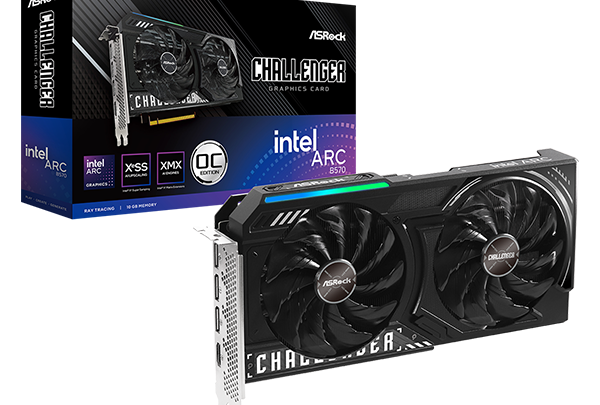
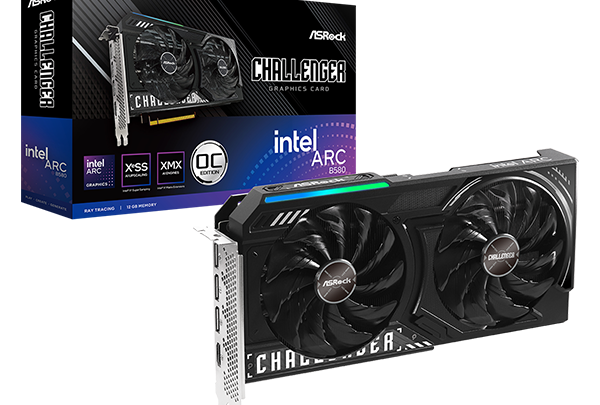
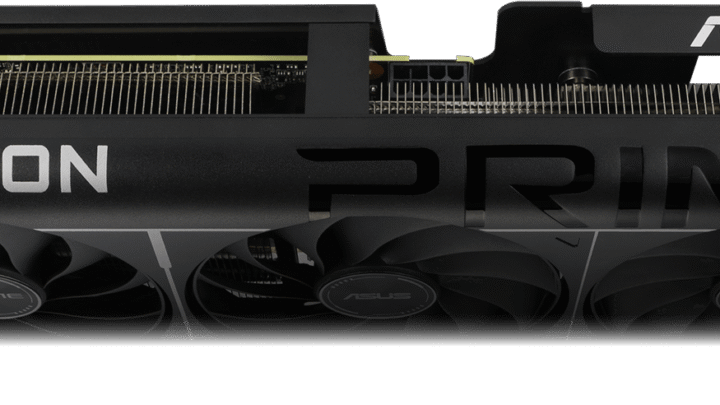
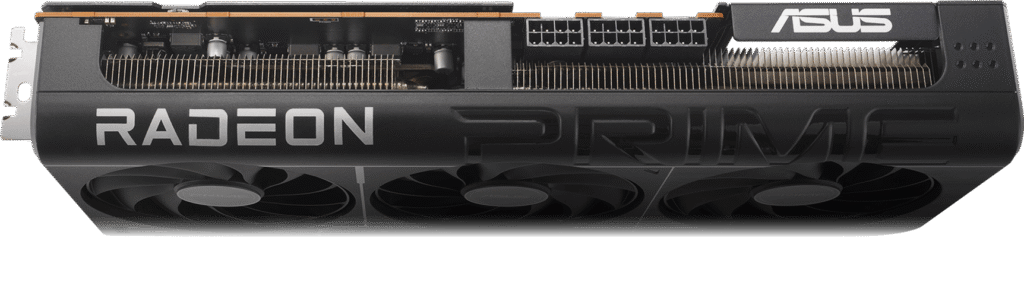
See the exact card designs
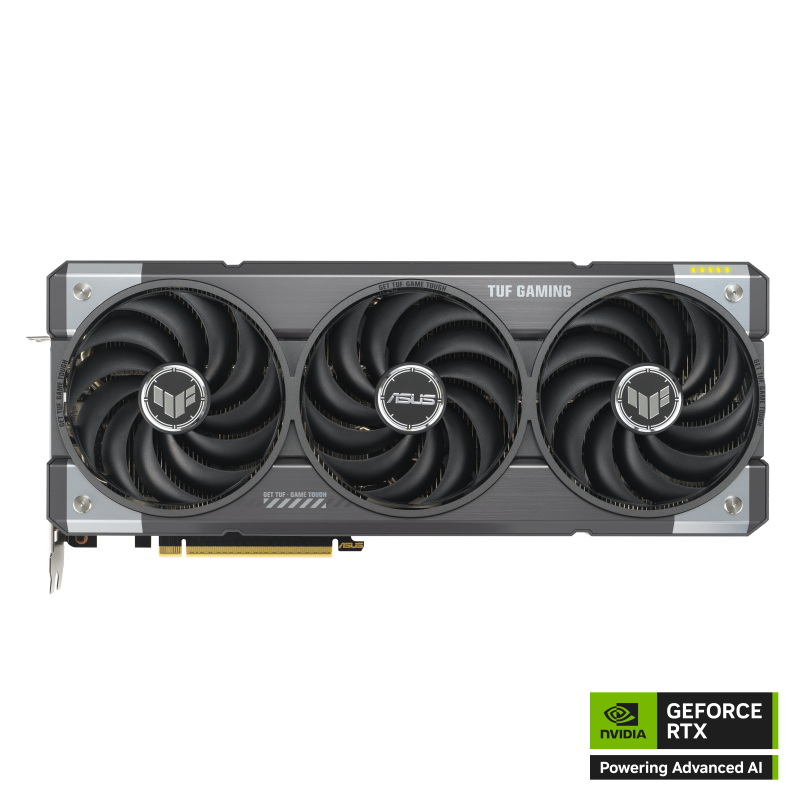
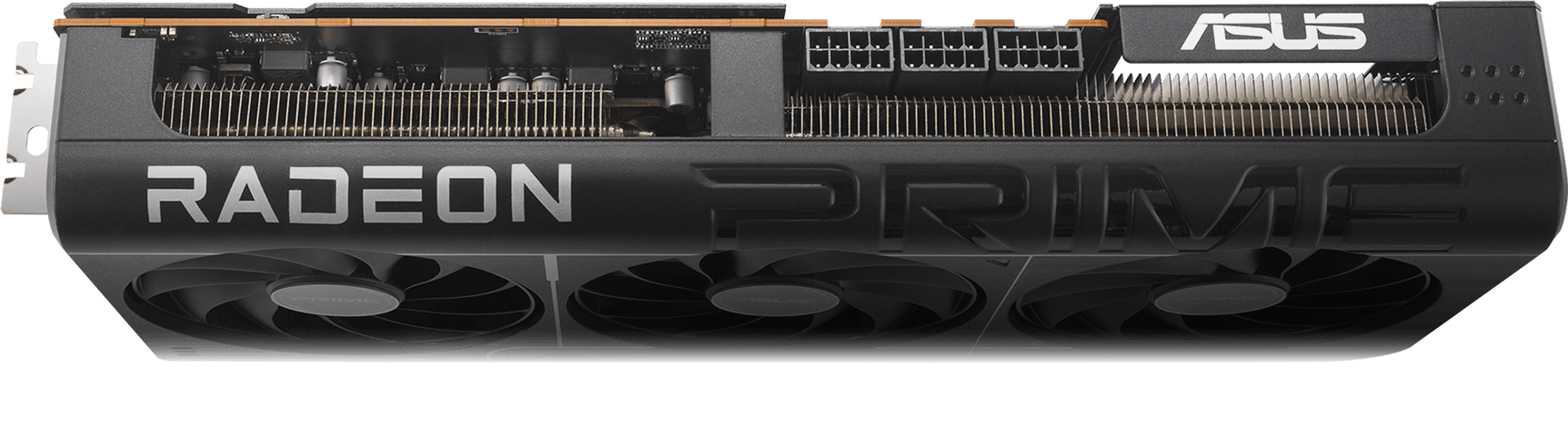
These existing manufacturer images show two board-partner implementations. Their different coolers cannot be used to infer a GPU-wide noise or temperature result. The product pages below contain the specific UK and US retailer choices.
Gaming performance: how close are these GPUs?
TechSpot retested the two GPUs in 52 games with two quality presets, including a mix of traditional rendering and ray-traced workloads. In that matched test system, the RTX 5070 Ti averaged about two frames per second more at 1440p, a roughly 1.4% advantage; the 1% low averages were 108 versus 107 fps. At 4K, its 84 fps average compared with 81 fps for the RX 9070 XT, a roughly 4% advantage. These are results from that particular suite, not a universal prediction for every library or preset.
| TechSpot 52-game aggregate | RTX 5070 Ti | RX 9070 XT | Interpretation |
|---|---|---|---|
| 1440p average | About 1.4% ahead | Reference | Very small overall gap |
| 1440p 1% low average | 108 fps | 107 fps | Nearly identical in this aggregate |
| 4K average | 84 fps | 81 fps | Roughly 4% GeForce lead |
RTX 5070 Ti at 4K
RX 9070 XT at 4K
Original visualisation of TechSpot’s 52-game 4K aggregate. The bars compare this one mixed-preset suite, not every game or a guaranteed frame rate on any retail partner card.
Game selection matters much more than a one-digit average difference. TechSpot found Radeon-favouring results in titles such as Call of Duty: Black Ops 7, Final Fantasy XVI and Ghost of Tsushima, while the GeForce led in examples including Crimson Desert, Warframe and Stalker 2. Check recent matched tests for your top games at your display resolution. An esports title with a frame-rate cap is a poor guide to a demanding 4K adventure game.
1080p gaming: buy for the rest of your workload
Both are capable high-end 1080p cards, but this resolution can expose CPU limits and game-engine caps before the GPU is fully used. The cited 52-game aggregate reports 1440p and 4K results, so it cannot supply a defensible 1080p winner. If you mainly play competitive games at 1080p, check whether your CPU and monitor can benefit from either premium card; compare the RTX 5070 and RX 9070 as potential lower-cost alternatives.
For a 1080p buyer choosing only between these two, the Radeon is attractive when cheaper and conventional gaming is the priority. Pay for the GeForce when you also need its heavier RT performance, specific DLSS support or CUDA applications. A large FPS lead in a game already running far above your monitor’s refresh rate may be less useful than a smaller lead in a demanding title.
1440p gaming: price and favourite games decide
TechSpot’s newer 52-game aggregate places the GeForce only about 1.4% ahead at 1440p, with 108 versus 107 fps for average 1% lows. Treat that as a tie for general buying purposes, not proof that the cards are equivalent in every game. In conventional rendering the Radeon led some popular titles while the GeForce won others. Changes to the sample or preset can change the average.
As a cross-check, TechSpot’s earlier 55-game comparison found the RX 9070 XT about 5% slower at 1440p in a largely raster-focused sample. That does not contradict the newer mixed-preset result: the games, drivers and rendering settings differ. Buyers should prioritise matched tests in their own titles and not average two unrelated studies into a new invented number.
4K gaming: a small aggregate GeForce lead
At 4K, TechSpot’s newer suite averaged 84 fps for the RTX 5070 Ti and 81 fps for the RX 9070 XT. A three-frame average gap does not settle a purchase by itself. The older 55-game raster-focused sample found a roughly 5% GeForce lead at 4K, broadly consistent with a small rather than transformative advantage.
At demanding native 4K settings, both cards can need upscaling. A game’s texture demands, ray-tracing preset and 1% lows matter more than a headline average. Look for tests of the exact quality settings you intend to use, then compare image quality and responsiveness as well as FPS.
16GB vs 16GB: memory speed is not capacity
Both GPUs provide 16GB of local graphics memory. That equal capacity makes texture and project-size headroom less of a differentiator than in an 8GB versus 16GB comparison. The RTX 5070 Ti’s GDDR7 yields 896GB/s of rated bandwidth, while the RX 9070 XT’s GDDR6 is rated up to 640GB/s and backed by a 64MB Infinity Cache. Neither bandwidth figure predicts cross-vendor frame rates by itself.
Memory allocation is not the same as required capacity. When a game exceeds available VRAM, lower textures, stutter or asset-streaming problems may appear; neither 16GB specification guarantees every future 4K texture pack. For creator work, check whether your application can use the buffer and whether it needs CUDA or another vendor-specific acceleration path.
Ray tracing: compare the actual effect and preset
The RTX 5070 Ti has the stronger case for heavy ray tracing and particularly path tracing. TechSpot’s Doom: The Dark Ages path-tracing test illustrated a large GeForce lead, yet even its faster result required upscaling or settings compromises for comfortable play. Cyberpunk 2077 and F1 25 were further examples where turning on demanding RT effects shifted the result towards NVIDIA. That does not mean the Radeon loses every RT game: TechSpot saw close or Radeon-favouring results in some other titles with lighter or differently implemented effects.
DLSS, FSR and frame generation
NVIDIA lists DLSS Super Resolution, Ray Reconstruction, Frame Generation and Multi Frame Generation for the RTX 5070 Ti in supported games. AMD’s RX 9070 XT supports the FSR feature family where a game integrates it. Feature availability, image quality and frame-generation behaviour depend on the title and version. Compare the same base resolution and a sensible Quality mode; generated frames improve displayed smoothness but do not replace a responsive underlying frame rate.
Power consumption, PSU and cooling
The official board power ratings are close: 300W for NVIDIA and 304W for AMD. They are not measured game consumption. TechSpot says the RX 9070 XT typically used about 20% more power than the RTX 5070 Ti in its measurements, making the GeForce more efficient in that context. Different ASUS, MSI or Sapphire boards can use different power limits, coolers and fan curves. Do not estimate an electricity bill from the two official ratings alone.
Both companies specify a 750W system PSU recommendation for their reference guidance. Inspect the exact retail card’s power connector, number of slots, length and cable clearance. A large premium cooler may be quiet but can make an otherwise compatible case a poor fit. NVIDIA’s family sheet describes adapter or suitable PCIe Gen 5 cable options; use the instructions included with your specific board and PSU.
Creator, streaming and local AI support
For editing, streaming, rendering and local AI, check your software’s supported GPU features before using a gaming chart as a proxy. NVIDIA specifies two ninth-generation NVENC encoders on the RTX 5070 Ti and offers CUDA support. AMD also provides modern media capabilities, including AV1, but workflow compatibility and export results depend on the application. If a particular tool requires CUDA, that can settle the decision regardless of raster gaming value.
PCIe, display outputs and older-PC compatibility
Both vendors list PCI Express 5.0 support, but a compatible GPU can operate in an older PCIe slot; do not buy a new motherboard merely to match the number on the box. Check your motherboard BIOS, case length, card thickness and PSU connectors before purchasing. Neither card should be judged from the other brand’s board photo. Modern Resizable BAR or Smart Access Memory support is sensible to enable where available, but it is not an Intel Arc-style absolute buying gate for this comparison.
NVIDIA’s family specifications list three DisplayPort outputs and one HDMI, with DisplayPort 2.1b support. AMD lists DisplayPort 2.1a and HDMI 2.1b for the RX 9070 XT. Exact board output count and supported link modes should be confirmed against the retail card and the monitor’s cable requirements. Display standards rarely outweigh a large price difference unless a particular monitor or capture workflow needs them.
Price and value: how large should the gap be?
The original US starting prices were $749 for RTX 5070 Ti and $599 suggested for RX 9070 XT. The 5000 Series product records also note historical UK launch figures of £729 and £569 respectively. Those figures describe launch positioning, not a current buy button. Retail pricing, tax, delivery, condition and partner-card premiums can change the conclusion.
The original US $150 difference was 20% of the GeForce’s $749 launch price, or 25% of the Radeon’s $599 suggested price. That was much larger than the few-percent performance gap in the cited aggregate. This is a historical value comparison, not a current price claim. Use final delivered prices from equivalent new cards to make the same calculation today.
- Gap under roughly 5% of the GeForce price: choose on your own games, creator support, power and warranty. The NVIDIA feature advantage may be worth a small premium.
- Gap around 5–15%: the Radeon becomes compelling for conventional gaming; pay more for the GeForce if the specific RT, DLSS or CUDA benefits matter to you.
- Gap above roughly 15%: Radeon usually has the clearer price/performance case for gaming, unless your workload strongly favours NVIDIA. Recheck competing cards and seller quality.
For current UK and US options, use the RTX 5070 Ti product page and RX 9070 XT product page. Their retailer boxes identify affiliate links and show the exact ASUS board models. Confirm stock, final price, shipping, tax, returns and whether a marketplace seller lists new or used stock. UK prices usually include VAT; US sales tax may be added at checkout.
Which card should you buy?
Buy the RX 9070 XT for discounted 1440p and 4K gaming
When its final price is materially lower and your games lean toward conventional rendering, the Radeon gives up little average performance in the cited 52-game comparison. It is the more persuasive value choice if a specific application does not require NVIDIA features.
Buy the RTX 5070 Ti for demanding effects or NVIDIA software
Choose the GeForce when your favourite games use heavy ray tracing or path tracing, or your work benefits from CUDA and its dual NVENC encoders. Its stronger measured efficiency is useful for a frequently used system, though an energy-saving claim should be checked against your actual workload and local electricity rate.
Choose neither when the exact listings are poor value
Two expensive factory-overclocked cards may cost much more than their launch positioning suggests. If both are unusually dear, compare the RX 9070, RTX 5070 and RTX 5080 in your country; also check condition, seller, warranty and whether a quieter or shorter cooler solves a real build requirement.
Retailer offers
Where to buy the NVIDIA GeForce RTX 5070 Ti and AMD Radeon RX 9070 XT
Compare current retailer availability for each card. Prices can change, so confirm the final total before buying.
NVIDIA GeForce RTX 5070 Ti
NVIDIA GeForce RTX 5070 Ti offers
Prices and availability are checked manually and may change. Confirm the final price with the retailer before buying.
Affiliate disclosure: We may earn a commission from qualifying purchases made through marked links, at no extra cost to you.
United Kingdom
-
Scan UK Availability not confirmedCheck retailer for current price Last checkedCheck UK price (non-affiliate) (opens in a new tab)
-
Overclockers UK Availability not confirmedCheck retailer for current price Last checkedCheck UK price (non-affiliate) (opens in a new tab)
-
Amazon UK — ASUS TUF RTX 5070 Ti OC Affiliate link Availability not confirmedCheck retailer for current price Last checkedCheck current price at Amazon UK (opens in a new tab)
United States
-
Newegg US Affiliate link Availability not confirmedCheck retailer for current price Last checkedCheck current price at Newegg (opens in a new tab)
-
B&H Photo Video Availability not confirmedCheck retailer for current price Last checkedCheck US price (non-affiliate) (opens in a new tab)
-
Amazon US — ASUS TUF RTX 5070 Ti OC Affiliate link Availability not confirmedCheck retailer for current price Last checkedCheck current price at Amazon US (opens in a new tab)
AMD Radeon RX 9070 XT
AMD Radeon RX 9070 XT offers
Prices and availability are checked manually and may change. Confirm the final price with the retailer before buying.
Affiliate disclosure: We may earn a commission from qualifying purchases made through marked links, at no extra cost to you.
United Kingdom
-
Amazon UK — ASUS Prime RX 9070 XT 16GB OC Affiliate link Availability not confirmedCheck retailer for current price Last checkedCheck current price at Amazon UK (opens in a new tab)
United States
-
Amazon US — ASUS Prime RX 9070 XT 16GB OC Affiliate link Availability not confirmedCheck retailer for current price Last checkedCheck current price at Amazon US (opens in a new tab)
International / other
-
Scan UK Availability not confirmedCheck retailer for current price Last checkedCheck UK price (non-affiliate) (opens in a new tab)
-
Overclockers UK Availability not confirmedCheck retailer for current price Last checkedCheck UK price (non-affiliate) (opens in a new tab)
-
Newegg US Affiliate link Availability not confirmedCheck retailer for current price Last checkedCheck current price at Newegg (opens in a new tab)
-
B&H Photo Video Availability not confirmedCheck retailer for current price Last checkedCheck US price (non-affiliate) (opens in a new tab)
Final verdict
Best value when it is substantially cheaper: RX 9070 XT. The broad cited game sample shows a very small average gap despite its lower original US price. Best for demanding ray tracing, efficiency and NVIDIA-dependent workflows: RTX 5070 Ti. Neither label overrides a large price swing or your own game’s results. Compare the exact models available in your country before buying.