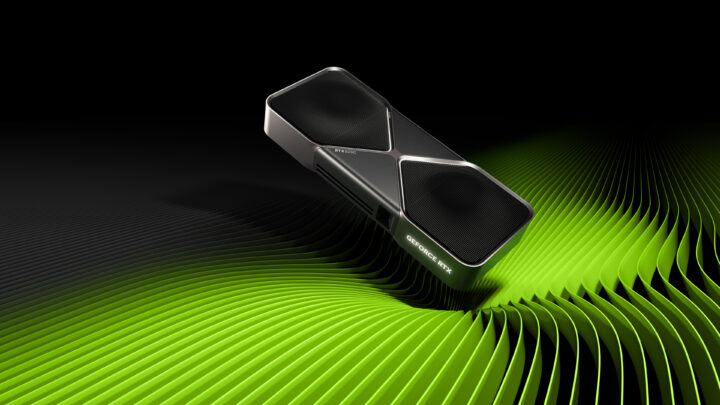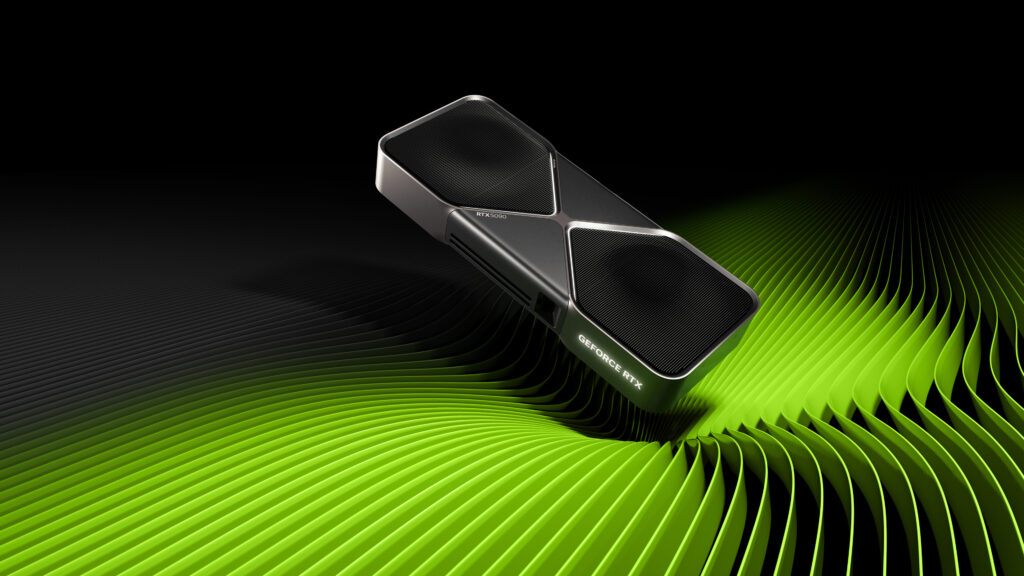
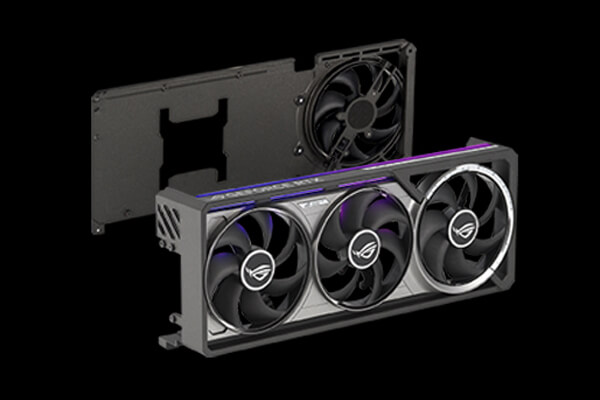
The NVIDIA GeForce RTX 5090 is the flagship desktop graphics card in the Blackwell-based GeForce RTX 50 Series. It launched on 30 January 2025 at £1,939 in the UK and $1,999 in the US for the Founders Edition. It is designed for uncompromising 4K gaming, GPU rendering, video production and demanding local AI workloads.
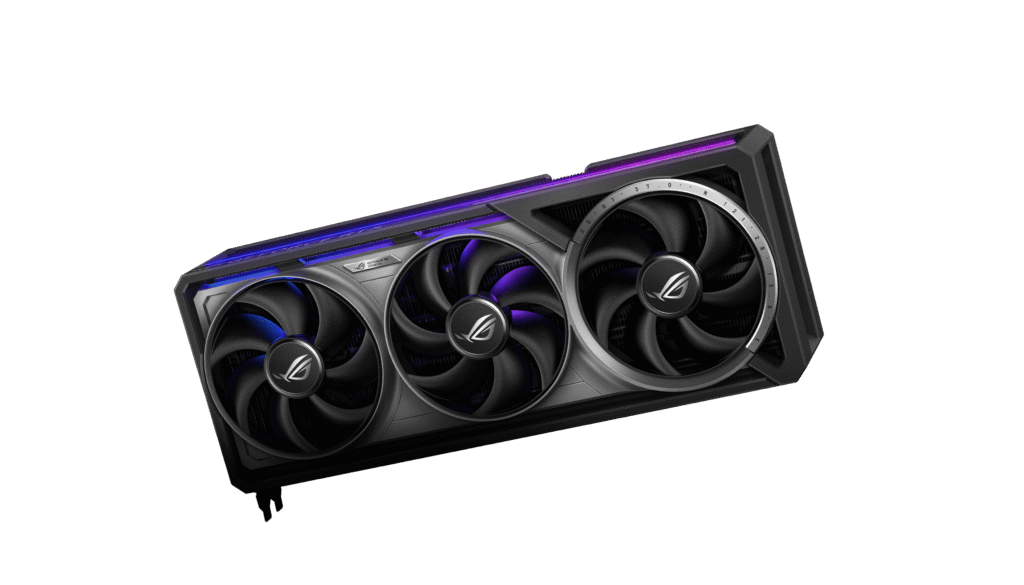
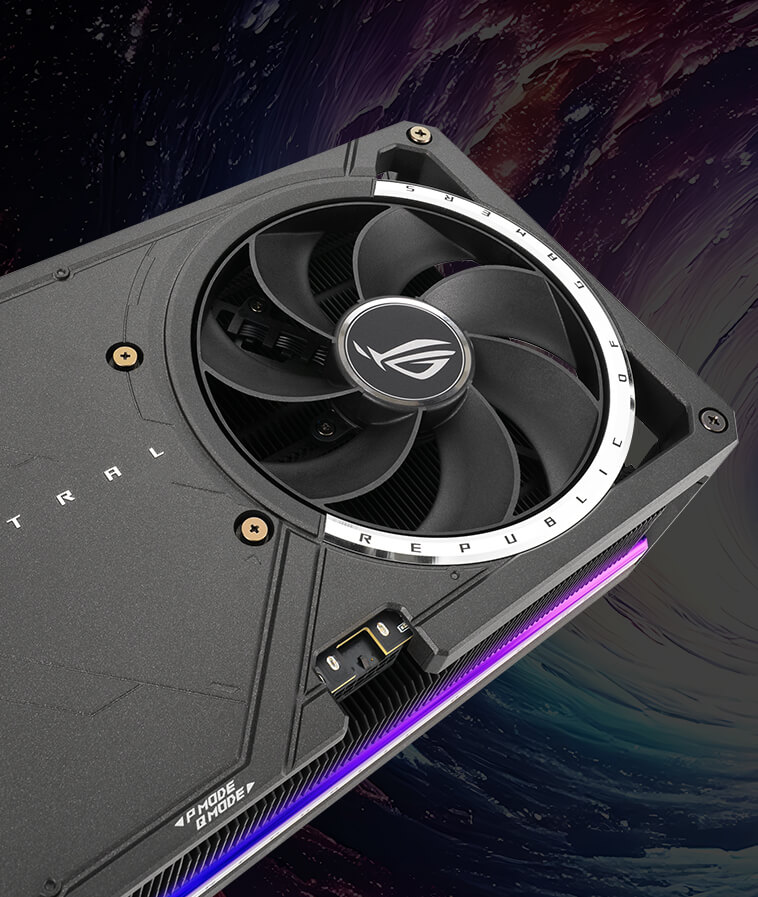
This page records NVIDIA’s reference and Founders Edition specifications. Add-in-board models from ASUS, Gigabyte, MSI, Palit, PNY, Zotac and other manufacturers can use different clock speeds, power limits, coolers and physical dimensions.
RTX 5090 specifications and architecture
The RTX 5090 uses NVIDIA’s Blackwell architecture and provides 21,760 CUDA cores, fifth-generation Tensor cores and fourth-generation ray-tracing cores. Its reference clocks are 2.01 GHz base and 2.41 GHz boost, although real operating frequency varies with temperature, workload and the power configuration used by each graphics-card manufacturer.
Memory is a major part of the specification. The card has 32 GB of 28 Gbps GDDR7 on a 512-bit interface, producing 1,792 GB/s of theoretical memory bandwidth. This gives the RTX 5090 substantially more capacity and bandwidth than the RTX 4090. Modern games rarely need the entire 32 GB, but the additional capacity can be useful for large rendering scenes, high-resolution video, complex texture sets and local AI models.
DLSS, ray tracing and creator features
Blackwell supports NVIDIA’s DLSS 4 feature set, including Super Resolution, Ray Reconstruction, Frame Generation and Multi Frame Generation in compatible games. Multi Frame Generation can insert as many as three generated frames between conventionally rendered frames. It can greatly increase displayed smoothness, but it does not replace a strong native frame rate and should not be interpreted as an equivalent reduction in input latency.
The RTX 5090 includes three ninth-generation NVIDIA encoders and two sixth-generation decoders with AV1 encoding and decoding support. These media engines are relevant to streamers, editors and creators working with high-resolution footage. CUDA, NVIDIA Studio drivers and the 32 GB frame buffer also make the card attractive for rendering and AI applications, although professional buyers should confirm application support and memory requirements before choosing consumer hardware.
Display support
The Founders Edition provides three DisplayPort 2.1b outputs with UHBR20 and one HDMI 2.1b output. With Display Stream Compression, NVIDIA lists support for resolutions and refresh rates up to 4K at 480 Hz or 8K at 165 Hz through DisplayPort, subject to the display, cable, colour depth and connection configuration. Up to four displays are supported within the available bandwidth.
Power and installation requirements
Total graphics power is rated at 575 W. NVIDIA’s detailed reference specification lists 1,000 W required system power based on a PC configured with a Ryzen 9 9950X, while its installation guidance notes that the precise minimum depends on the complete system. A high-quality modern power supply with sufficient headroom is strongly recommended.
Power can be supplied by one suitable PCIe Gen 5 cable or the included adapter using separate PCIe eight-pin cables, following the instructions provided with the card and power supply. The connector must be inserted fully and the cable should not be sharply bent next to the socket. Buyers should verify the exact requirements of their selected partner model because factory-overclocked cards can differ from the reference design.
The Founders Edition itself is 304 mm long, 137 mm high and occupies two physical slots, but NVIDIA recommends additional clearance for airflow and the power cable. Many partner cards are considerably thicker or longer. Measure the case, check unused expansion slots and account for front-mounted radiators before purchasing.
Who should consider the RTX 5090?
The RTX 5090 is most appropriate for high-refresh 4K gaming, advanced ray tracing, demanding creation workloads and local AI tasks that can use its 32 GB of VRAM. It is excessive for most 1080p systems and frequently poor value for 1440p gaming, where less expensive cards can provide a more balanced result.
RTX 4090 owners should compare the cost with the specific benefit their workload receives. Published evidence shows a meaningful 4K performance improvement, but not every game or application gains equally. Owners of older RTX 30-series cards will see a much larger generational change, although the total system cost remains substantial.
UK and US pricing
The Founders Edition launched at £1,939 in the UK and $1,999 in the US. These figures are historical launch prices rather than guaranteed current selling prices. NVIDIA has changed regional pricing since launch, and availability, exchange rates and partner-card premiums can move retailer prices significantly.
Any offers displayed on this page are maintained separately and should identify their market and currency clearly. Always confirm the exact model, final checkout price, delivery terms and returns policy with the retailer before purchasing.
Read the full assessment
Our NVIDIA GeForce RTX 5090 review evaluates independently published performance, ray tracing, DLSS 4, creator capability, efficiency and value. The full assessment is available now, with attributed benchmarks and a clear evidence-based methodology.